Few of us are strangers to adhesives, used anywhere from kindergarten art to do-it-yourself projects. Some are designed to allow things to come off easily—think of sticky notes—while others hold things together for ages. Things bonded with the latter type, however, are often difficult to detach cleanly without causing damage.
Xin Yi Oh, a Scientist at the A*STAR Institute of Sustainability for Chemicals, Energy and Environment (A*STAR ISCE2), and Vinh Truong, an A*STAR ISCE2 Principal Scientist, are keenly interested in on-demand reversible adhesives, which balance strong sticking power with easy removal as needed.
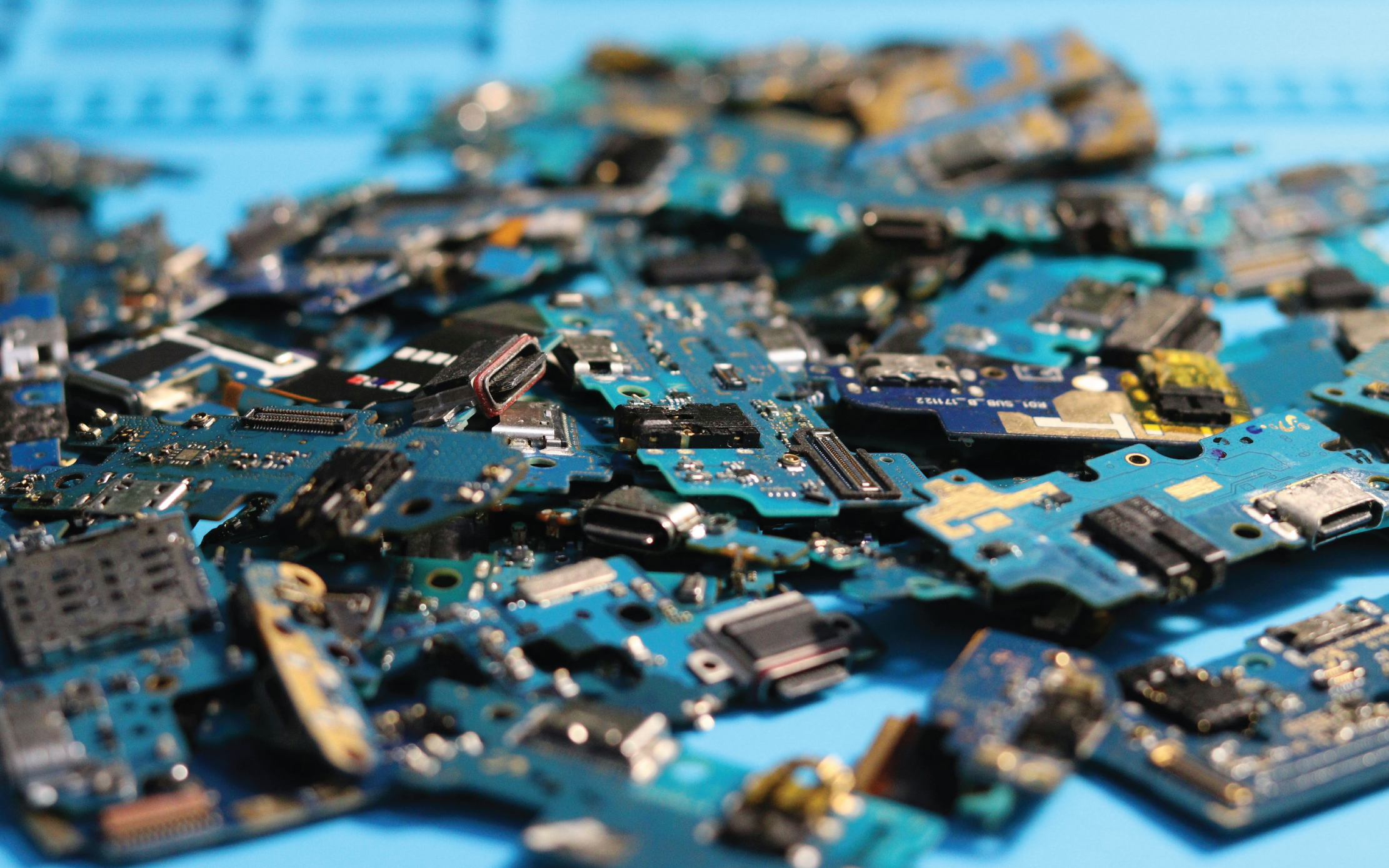
“Such adhesives are extremely useful and versatile. For example, phone parts need to stay in place and survive drops during daily use but also detach easily during repairs and recycling without leaving sticky residues,” Oh explained.
To switch between sticky states, these adhesives rely on triggers such as heat, light or chemicals. However, it can be complex to design adhesives that activate reliably and safely. To that end, Oh, Truong and A*STAR ISCE2 colleagues are developing a new light-reversible adhesives platform with collaborators from the Singapore University of Technology and Design.
“Light is easily generated and applied,” said Truong. “It also offers highly precise, remote and localised control over adhesion and release.”
A critical element of their adhesives platform is photocycloaddition: a chemical reaction system where, on exposure to light of certain colours or wavelengths, two light-absorbing molecules meet and form a strongly bonded cyclic structure. Light of a different colour would cause the structure to break apart, restoring its original molecules.
“Think of our reaction system as two LEGO pieces that can come together, perfectly aligned, or be taken apart using different colours of light,” said Oh.
Light-based adhesives tend to rely on close contact with short, energy-demanding wavelengths (240–400 nm) of ultraviolet (UV) light, which can also degrade materials and pose health risks. To circumvent this, the team redshifted the photocycloaddition process to create adhesives that responded to longer, lower-energy wavelengths: visible blue light (400–500 nm) and UV light (340–350 nm) for bonding and debonding respectively.
“This means our reversible adhesives respond to safer, more practical light sources, which also penetrate deeper into thick or opaque materials,” Truong added.
In bench tests, the researchers found that beyond demonstrating strong bonds with glass, wood, steel and acrylic, the adhesives generated through their platform were stable at temperatures up to 70 °C and when immersed in liquids. They also switched bonding states rapidly and efficiently under their intended light triggers.
Oh and Truong see immense commercial potential in their platform, particularly for consumer products such as reusable tapes, labels and fasteners. For now, the team is exploring other triggers and redshifting methods to boost the strength, material compatibility and penetrative capacity of their platform’s adhesives.
The A*STAR-affiliated researchers contributing to this research are from the A*STAR Institute of Sustainability for Chemicals, Energy and Environment (A*STAR ISCE2).