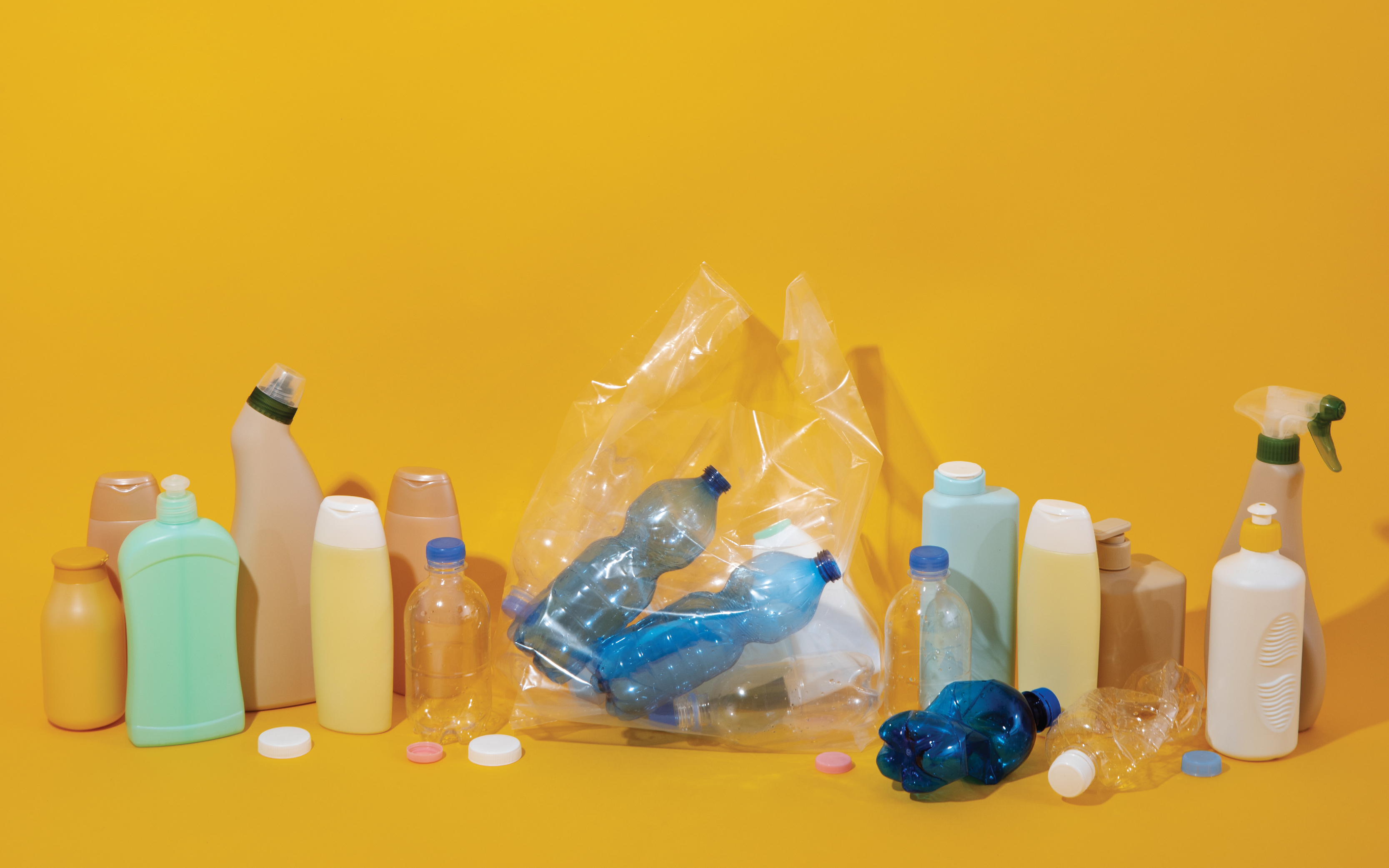
When you’re done with a plastic bottle, it’s easy enough to check it for a tell-tale numbered triangle that confirms it’s meant for a recycling bin. However, what isn’t easy is turning that old bottle into a new one that’s just as sturdy, clear and flexible.
“With current plastic recycling processes, it’s nearly impossible to avoid mixing different types of plastic, especially with domestic waste sources,” said Zhuang Mao Png, a Scientist at the A*STAR Institute of Sustainability for Chemicals, Energy and Engineering (A*STAR ISCE2). “Compared to virgin material, recycled plastics have inferior properties that typically limit them to lower-value uses, such as filler materials.”
Png and colleagues at both A*STAR ISCE2 and A*STAR Institute of Materials Research and Engineering (A*STAR IMRE), including Zibiao Li, Director of the Resource Circularity Division at A*STAR ISCE2, have been working on new ways to upcycle plastics into vitrimers, creating products with more value than the initial material.
“There are generally two groups of plastics: those with crosslinks, and those without. Crosslinks often enhance a plastic material’s properties but also make it impossible to melt down and reshape,” said Li. “Vitrimers, however, are crosslinked plastics with the best of both worlds. They’re stronger than uncrosslinked plastics, but their links are dynamic, meaning they can be broken and reformed into materials with similar properties.”
The team recently developed a vitrimisation process that not only transforms un-crosslinked plastics into vitrimers—offering a promising upcycling method—but also makes that process reversible, which could help to reduce the mechanical and temperature requirements for reprocessing.
“Selectively breaking down the vitrimer’s crosslinks without impacting the polymer backbone helps to ease the reprocessing conditions required,” said Png. “The resulting thermoplastic can then be reformed into desired shapes, then vitrimerised again, restoring its superior properties.”
Unlike monomers, polymers can be more challenging to vitrimerise. Their long hydrocarbon chains stubbornly resist being chemically altered, except via radical-based methods that often spark unwanted side reactions. However, by using a carbene-based strategy, the team found a different route to coax the polymers into crosslinking while avoiding those reactions.
When the team tested their process on various plastics, the resulting materials surprised even themselves. “The initial vitrimisation improved material performance by about 50 percent, depending on the original material,” said Li. “However, after going through de- and re-crosslinking, the reformed materials showed performance enhancements of up to 800 percent.”
The team also found that a wide range of plastics were suited to the process, including low- and high-density polyethylene (LDPE and HDPE), polypropylene (PP), polystyrene (PS) and mixed plastics.
With their promising results, the team aims to expand their strategy to more materials and applications. “It provides an easily accessible toolbox to vitrimerise all sorts of plastics without extensive chemical functionalisation or reinvented polymerisation methods,” Png added.
The A*STAR-affiliated researchers contributing to this research are from the A*STAR Institute of Sustainability for Chemicals, Energy and Engineering (A*STAR ISCE2) and A*STAR Institute of Materials Research and Engineering (A*STAR IMRE).