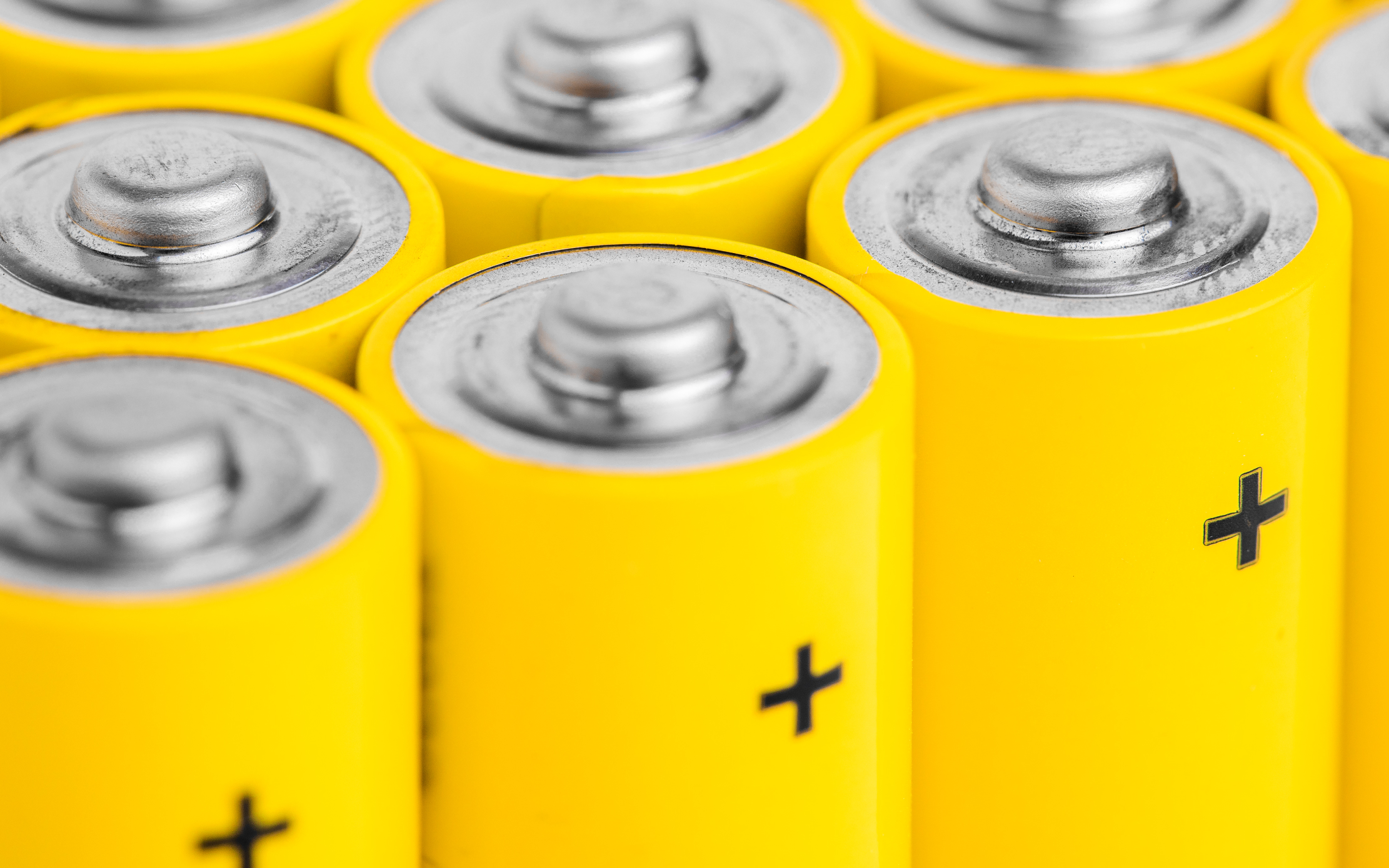
Food, water and shelter are daily essentials for all, but many people today would add batteries to their list. As the clean energy boom drives demand for portable power, lithium-sulfur (Li-S)-based batteries are emerging as promising contenders against sodium and magnesium counterparts.
“Li-S batteries can store significantly more energy for the same weight, making them especially appealing for drones, electric vehicles and other lightweight systems,” said Yong-Wei Zhang, Distinguished Principal Scientist at the A*STAR Institute of High Performance Computing (A*STAR IHPC).
However, while sulfur is cheap, abundant and environmentally-friendly, the sulfur redox reaction (SRR)—key to Li-S battery mechanics—can be sluggish, making such batteries relatively slow to charge and discharge. To accelerate the SRR, some researchers are eying single-atom catalysts (SACs): materials with individual reaction-boosting metal atoms spread out on their surface.
“SACs use metal very efficiently, but they have their own limitations: they only behave in fixed, predictable ways, which restricts how well they handle complex, multi-step reactions like those in Li-S batteries,” said Zhang.
Taking a different tack, Zhang and A*STAR IHPC colleagues including Research Scientist Hao Yuan teamed up with the A*STAR Institute of Materials Research and Engineering (A*STAR IMRE); Haimei Wang, John Wang and colleagues from the National University of Singapore; and colleagues from Shandong University, China, in pivoting to dual-atom catalysts (DACs). Zhang compared DACs to two-person teams with complementary strengths: two different metal atoms placed close together on the same surface, mutually interacting to create more flexible, powerful reaction centres.
Through computer simulations, the team zeroed in on cobalt and iron as a potentially ideal combo for Li-S battery DACs. Besides being affordable and readily available, the metals are also complementary, with cobalt holding reacting molecules as iron breaks them down. The paired atoms’ asymmetrical structures could also be used to control Li-S battery chemistries for performance, stability and extended life.
Based on their findings, the team built prototype cobalt-iron (CoFe) DAC cathodes, then analysed their structures and SRR electrocatalytic performance in Li-S coin batteries. They found that CoFe DACs not only sped up a crucial SRR step, but also guided sulfur reactions more efficiently, reduced harmful by-products and improved battery stability. Overall, the DACs cathodes achieved a high initial specific energy capacity (703.9 mA-h/g at 3 ºC), and a long cycling life (decay rate of 0.031 percent over 1,000 cycles).
“Our CoFe-based Li-S battery performed as well, or better than, many top Li-S systems reported in recent years,” said Zhang. “This suggests a new recipe for better Li-S batteries—using metal pairs instead of single atoms, and tailoring each pair to each battery’s specific needs.”
Zhang added that their CoFe-based Li-S battery can also be handled in regular atmospheric conditions, making it practical and cost-effective for manufacturing.
The A*STAR-affiliated researchers contributing to this research are from the A*STAR Institute of High Performance Computing (A*STAR IHPC) and the A*STAR Institute of Materials Research and Engineering (A*STAR IMRE).