


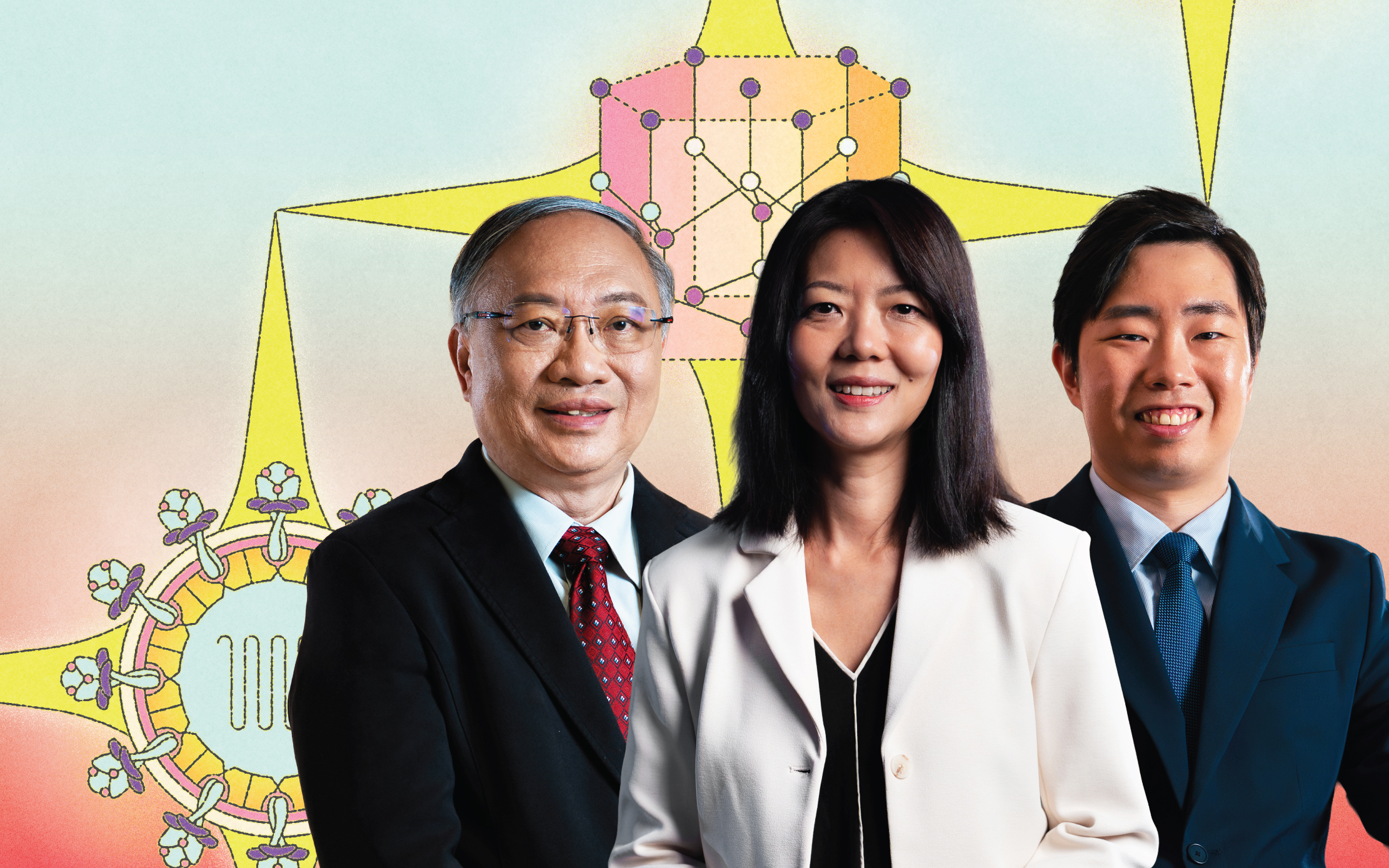
Science is a continual push against the boundaries of knowledge, driven by a hunger to turn discovery into real-world impact. Each year, the President’s Science and Technology Awards (PSTA)—Singapore’s highest honours for scientists and engineers—recognise exceptional individuals and teams who, by spearheading such endeavours, have reshaped the country’s science and technology landscape.
The 2025 PSTA cohort includes three A*STAR investigators whose scientific leadership and pioneering spirit span fields from viral diseases to semiconductor engineering. The awardees are Lisa Ng, Executive Director of the A*STAR Infectious Diseases Labs (A*STAR IDL) and recipient of the President’s Science Award (PSA); Geok Ing Ng, Executive Director of the National Semiconductor Translation and Innovation Centre for Gallium Nitride (NSTIC (GaN)) and recipient of the President’s Technology Award (PTA); and Yi-Hao Chan, a Principal Investigator at A*STAR IDL and recipient of the Young Scientist Award (YSA).
In this exclusive A*STAR Research interview, the three awardees share key milestones from their scientific journeys and reflect on the motivations fuelling their groundbreaking work.
President’s Science Award 2025

Lisa Ng
Executive Director, A*STAR Infectious Diseases Labs (A*STAR IDL);
Executive Director, Biomedical Research Council (BMRC), A*STAR
“For pioneering contributions to viral infection immunology and advancing global pandemic management through groundbreaking research on arboviruses, in particular, chikungunya.”
1. With your prior experience, what was it like being at the frontlines of the COVID-19 pandemic?
I had previously worked on coronaviruses during my PhD degree at the National University of Singapore in the early 2000s. After joining the A*STAR Genome Institute of Singapore (A*STAR GIS) in 2002, one of the viral diseases I focused on was the severe acute respiratory syndrome (SARS) coronavirus, and that work helped build a framework for broad-range disease preparedness capabilities in terms of pathogen biology, infection and immunity, and disease mechanisms. During the COVID-19 pandemic, our team’s data at A*STAR IDL generated important mechanistic findings that guided national vaccination strategies and safety measures, while our diagnostic assays supported Singapore’s public health response.
Personally, I felt both excitement and apprehension during the time. It was rewarding to put my knowledge to good use, yet daunting to confront the pandemic’s escalating severity. Every decision was time-critical, often requiring constant communication with clinical partners and collaborators under immense pressure.
2. What are some transformative works you’ve spearheaded in infectious disease research?
Early in my career, I helped develop one of the world’s first diagnostic kits for SARS, enabling rapid detection when speed meant saving lives. During the 2005–2006 bird flu outbreaks, I also developed polymerase chain reaction (PCR)-based assays for H5N1. These molecular assays and immunoassays have since been shared globally.
My research has long focused on how immunity shapes disease progression and severity. Using advanced immuno-monitoring technologies, my team and I have identified biomarkers that show how patients’ immune systems respond to infections and vaccines—insights that have informed better clinical interventions and public health strategies.
Pandemic preparedness is a lifelong mission for me. Drawing on lessons from SARS, Zika and COVID-19, I’ve worked closely with academia, public health agencies, industry and research networks worldwide to translate research into real-world solutions; strengthen global surveillance systems; inform vaccine pipelines; and enhance international collaboration. A key milestone was the successful formation of A*STAR IDL’s strategic alliance with the Institut Pasteur, France, via a Memorandum of Understanding in 2024, followed by a Master Research Collaboration Agreement in 2025 to address global health priorities.
3. What were some key insights from your work on chikungunya in particular?
While dengue has long been a public health concern, we were among the first to sound the alarm on the growing threat posed by the chikungunya virus (CHIKV). We found how CHIKV triggers both protective and damaging immune responses, explaining why some patients recover quickly while others suffer prolonged joint pain. Identifying immune signatures that predict disease outcomes has paved the way for improved diagnostics, vaccines and therapeutics. These findings have advanced global understanding of chikungunya and informed more effective outbreak responses worldwide.
4. In your opinion, how prepared are we for the next global pandemic?
We’re better equipped now than we were pre-COVID-19, though much remains to be done. After borders reopened during the pandemic’s later period, our team studied vaccine booster effectiveness. As A*STAR IDL Executive Director, I also established A*STAR’s High Containment Biosafety Level 3 (BSL-3) Facility to safely study high-risk pathogens—critical infrastructure that strengthens Singapore’s preparedness and resilience against future crises.
From a research perspective, various teams have both broadened and deepened their research capabilities in surveillance, detection, prevention and intervention. Many innovative technologies have been developed and translated for diagnostics and therapeutics. In addition, regional and global networks have also been also established to address gaps in epidemic readiness by enabling rapid, science-driven responses to emerging threats. These partnerships will build a robust talent pipeline, equipping the next generation of researchers to tackle global health challenges.
5. What does the PSA mean to you?
I have devoted nearly 30 years of hard work to developing innovative solutions to combat infectious diseases. That effort has allowed me to strengthen the scope of my knowledge from pathogen biology to immunity, bridging basic science and useful translation. As such, the PSA honours my lifelong mission: to always do the right thing and to do it right; to use science as a force for good; and to build a safer, healthier and more resilient world for all. The award also recognises both the impact of my work in viral infection immunology, and the collective effort to strengthen global pandemic preparedness.
President’s Technology Award 2025
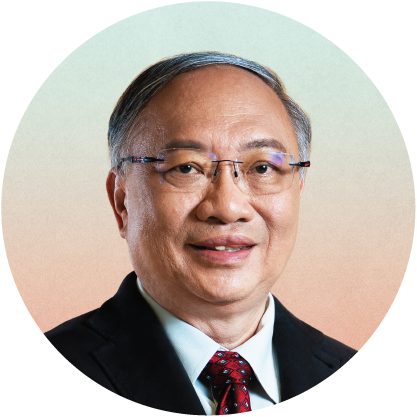
Geok Ing Ng
Executive Director, National Semiconductor Translation and Innovation Centre for Gallium Nitride (NSTIC (GaN));
Professor, Nanyang Technological University, Singapore
“For groundbreaking work in advancing Singapore’s capabilities in radio-frequency gallium nitride (RF GaN)—an advanced III-V compound semiconductor technology—particularly in defence and commercial applications, by enabling local manufacturing capabilities and nurturing talents in this strategic field.”
1. What does RF GaN do in our daily lives?
Simply put, RF GaN makes our electronic world run faster, smarter and greener. It’s a material used in chips that can send and receive signals much more efficiently than traditional ones. In everyday terms, it helps our devices talk to each other better while using less power in the process.
You may not realise it, but RF GaN quietly works behind the scenes every time you stream a video, make a call or use a 5G connection. It powers technologies such as mobile networks, Wi-Fi routers and satellite communications; it is the invisible infrastructure that keeps our lives connected. Thanks to RF GaN, you can download a movie in seconds instead of minutes, enjoy crisp video calls, and stay connected even in busy places like airports or concerts.
What makes RF GaN truly exciting is its ability to perform under high power and heat—something that’s crucial for the next generation of electronics. Whether through faster connectivity, cleaner energy systems or smarter vehicles, RF GaN is a key technology shaping the future of how we live and communicate.
2. What makes Singapore a prime region for RF GaN R&D and production?
Singapore has spent decades building one of the most advanced semiconductor ecosystems in the world. We’ve got world-class infrastructure, cutting-edge research institutes and strong government support for innovation. But what really sets Singapore apart is its collaborative spirit—how seamlessly our public institutions, universities and industries work together. That’s exactly what’s needed to bring complex technologies like RF GaN from the lab into the real world.
Our strengths in precision manufacturing and quality control, combined with a highly skilled workforce, mean we can take new discoveries and scale them up efficiently. At the same time, Singapore’s national focus on sustainability and energy efficiency aligns perfectly with RF GaN’s strengths—high performance with lower energy use. In many ways, Singapore isn’t just well-suited for RF GaN innovation—it’s the ideal testbed for the smart, sustainable technologies of the future.
3. Tell us about some meaningful milestones in your work.
I’ve always believed that Singapore must chart its own path in critical technologies. In 2005, with support from the Ministry of Defence, I helped set up the Monolithic Microwave Integrated Circuit (MMIC) Design Centre: the country’s first and only defence R&D lab dedicated to III-V semiconductors. We were a small but determined team with a big mission—to build Singapore’s own expertise in GaN chip design and fabrication.
Together, we developed Singapore’s first qualified GaN MMIC baseline process on 4-inch wafers, achieving performance levels that rivalled top global foundries. It was a proud moment—not just technically, but nationally—proving that Singapore could stand shoulder-to-shoulder with the world’s best. I was honoured to receive the Defence Technology Prize in 2023 for that achievement, but the real reward was seeing our country build homegrown capabilities in such a strategic field.
Beyond defence, I’ve always been excited by GaN’s commercial potential, from 5G and 6G communications to automotive radar and satellite systems. As early as 2008, my team at Nanyang Technological University, Singapore was exploring GaN-on-Silicon technologies, long before they became a global trend. It was challenging at first as funding was limited and the technology was still in its infancy; but we pushed through because we saw where the future was heading.
That early work has since laid the foundation for Singapore’s national GaN ecosystem, culminating in the National Semiconductor Translation and Innovation Centre for GaN (NSTIC(GaN)). The centre was launched in 2023 with S$123 million in Phase 1 funding from the National Research Foundation. Seeing that journey—from a small lab to a national platform—has been one of the most fulfilling moments of my career.
4. In your opinion, what makes a good mentor?
A good mentor doesn’t just teach—they inspire curiosity and courage. Science is full of uncertainty, so I always tell my students that it’s OK to stumble, as long as they keep asking questions and pushing boundaries. I try to give them the freedom to explore bold ideas, but also the guidance to stay grounded in solid science.
Mentorship is about balance: giving people room to grow while holding them to high standards. I want my students to feel empowered to take ownership of their ideas, collaborate widely and learn from failure. The goal isn’t to create followers, but to nurture future leaders who think critically, innovate responsibly and uplift those around them.
5. What does the PTA mean to you?
The award is a deeply humbling honour. It represents not just personal recognition, but also a tribute to the many brilliant colleagues, students and collaborators who have been part of this journey.
The PTA reaffirms the importance of investing in long-term, high-impact research that strengthens Singapore’s technological edge and inspires the next generation of scientists and engineers. Ultimately, it is a reminder that science is most meaningful when it serves society—improving lives, advancing industries and building a more connected, sustainable future.
Young Scientist Award 2025

Yi-Hao Chan
Principal Investigator, A*STAR Infectious Diseases Labs (A*STAR IDL)
“For research on viral encephalitis, revealing how the brain defends itself from life-threatening viral infections.”
1. What drew your focus to viral encephalitis?
I’ve worked on a range of viral infectious diseases over the years, but I’ve long been intrigued by why people who are infected with the same virus experience vastly different clinical outcomes. While most of them recover uneventfully, a small subset develops severe complications such as encephalitis—basically, brain inflammation—often with no clear explanation.
My focus on this area stems from both clinical urgency and scientific curiosity. Clinically, many viral encephalitis cases lack identifiable causes, so there are no targeted treatments available for them, which is a critical gap in our medical understanding. Scientifically, I’m fascinated by the use of human genetics as a compass to uncover the underlying deficiencies or perturbations that can compromise the brain’s immune defences against viral invasion.
Each discovery in this field doesn’t just provide answers for affected patients and families, it also reveals new and non-redundant pathways of antiviral immunity; expands our knowledge of how the human body—the brain in particular—defends itself against viral infection; and deepens our overall understanding of human biology.
2. What are some updates from your ongoing work with the TMEFF1 protein?
In our recent study published in Nature, we described TMEFF1 as a cell membrane protein with a viral restriction function against herpes simplex virus 1 (HSV-1) entry into neurons. We showed that TMEFF1 interferes with the NECTIN-1-HSV-1-gD pathway, a pathway used by the virus to infect host cells. This means that TMEFF1 essentially acts as a molecular barrier preventing HSV-1 from entering neurons.
Interestingly, TMEFF1 is highly expressed in the brain, suggesting that its physiological role extends beyond normal neuronal function; it includes innate antiviral protection. This could partly explain why the healthy brain is largely resistant to HSV-1 infection.
Leveraging this discovery, we’re now working to delineate the specific domains and structural features of TMEFF1 that allow it to bind to NECTIN-1 and mediate its antiviral activity. By mapping these interaction sites, we aim to uncover the precise molecular determinants of HSV-1 viral restriction and explore whether this mechanism can be harnessed or mimicked therapeutically. This work would have implications for protection against not just HSV-1-associated diseases, such as cold sores and encephalitis, but also other viral infections that use NECTIN-1 as an entry receptor.
3. Apart from TMEFF1, what other unexpected discoveries have come up in your work?
We’ve also found that DBR1 gene deficiency can cause isolated SARS-CoV-2 brainstem viral encephalitis. The DBR1 protein is the only known intronic RNA lariat debranching enzyme in humans. In a patient with DBR1 deficiency, we observed the accumulation of intronic RNA lariats, which disrupted the body’s normal antiviral responses.
This was also one of the first demonstrations that metabolic RNA processing can directly impact neuron-intrinsic immunity against viruses, particularly in the hindbrain. This discovery also provided new insight into why certain individuals are selectively vulnerable to brainstem infections. Moreover, DBR1 deficiency has since been linked to susceptibility to not only SARS-CoV-2 but also HSV-1, influenza virus and norovirus—all potential causes of brainstem encephalitis.
4. In your opinion, what are some major challenges faced by young scientists today?
Balancing scientific ambition with practical constraints, especially in terms of funding, resources and the pressure to produce high-impact publications, is a key challenge. In the early stages of building a lab, it can be difficult to juggle productivity and long-term sustainability while striving to establish a distinct scientific identity.
Strong mentorship is equally critical. Guidance from experienced mentors plays an invaluable role in shaping a scientist’s career. It not only sharpens one’s scientific thinking but also provides support throughout the transition from postdoctoral training to independent investigatorship.
At A*STAR IDL, structured mentorship programmes such as fireside chats offer safe and open spaces for early-career researchers to seek advice and share experiences. Beyond the institute, I’ve also benefited greatly from inter-institutional mentorship sessions organised by Huck Hui Ng, A*STAR Assistant Chief Executive of Research and Talent Development, and Shi Yan Ng, Associate Director of Education and Training at the A*STAR Institute of Molecular and Cell Biology (A*STAR IMCB). These sessions have offered diverse and practical perspectives on navigating a scientific career.
In turn, I now strive to pay it forward by mentoring young scientists through one-on-one guidance and internship opportunities in my lab. I believe that perseverance, humility and mentorship remain the key ingredients for young scientists to grow, adapt and ultimately make lasting contributions to science.
5. What does the YSA mean to you?
The YSA is a prestigious award and I am deeply honoured to receive it. It affirms the relevance and importance of my research in advancing our understanding of human antiviral responses, and improving clinical diagnosis, prognosis and patient care for those affected by viral diseases.
As its name suggests, the award marks an early milestone in my scientific journey. It motivates me to continue contributing meaningfully to the scientific and medical ecosystem—both in Singapore and across the region—by advancing research that translates into real benefits for human health.


