



Formerly found exclusively in hospitals and laboratories, personal protective equipment (PPE) has become part and parcel of everyday life due to the pandemic. Across the globe, medical staff is scrambling to secure limited supplies of surgical masks and N95 respirators to minimize transmission of airborne SARS-CoV-2.
Given worldwide PPE shortages, hospitals in the US to South Africa have reportedly come up with a new approach to limit COVID-19 infection: creating protective ‘bubbles’ around patients using barrier enclosures. Such box shields are typically mounted on the hospital bed over the patient’s head. This strategy traps any virus-containing aerosol emissions produced as patients cough or talk, reducing the risk of airborne transmission to healthcare workers.
While box shields have taken various forms during the pandemic, few studies have definitively assessed the effectiveness of these enclosures. To fill this gap, a multi-disciplinary team led by Dan Daniel of A*STAR’s Institute of Materials Research and Engineering (IMRE). investigated whether simple, cost-effective materials could be used to create effective barriers against aerosol particles.
Daniel, an expert in droplet and aerosol physics, hypothesized that the physical barrier alone would not be enough to create a robust, sealed system—enclosures would also need to be placed under negative pressure, meaning that fresh air should be able to flow into the chamber but not out of it.
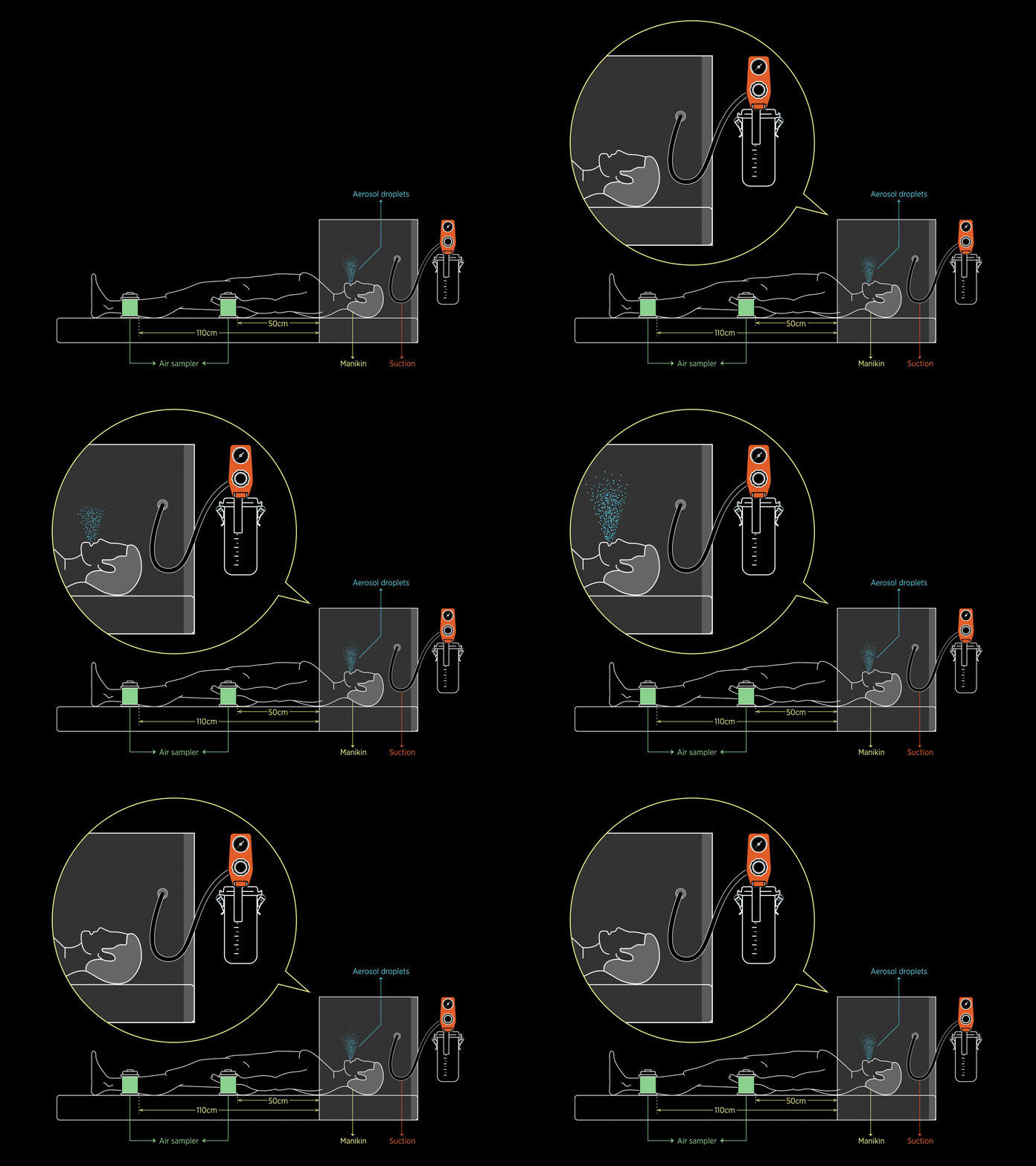
© A*STAR Research
“Sufficient suction is necessary to create a negative pressure environment inside the chamber and contain the aerosol emitted by patients,” explained Daniel, noting that previous barrier enclosure designs failed to take this into account.
Collaborating with researchers and clinicians from Ng Teng Fong General Hospital, Nanyang Technological University, Singapore and Ngee Ann Polytechnic, Daniel and the team first designed and constructed a model suction-powered box shield using readily available materials like acrylic and plastic draping. Suction was then provided by two wall units typically found above hospital beds.
To simulate real-life conditions, the researchers custom-built a special manikin that generated and exhaled aerosols much like a COVID-19 patient would. The team then placed the manikin in the box shield, visualizing and measuring the presence of any leaking aerosols.
As hypothesized, the box shield coupled with suction reduced the leakage of exhaled aerosol by over 99 percent. In comparison, a passive enclosure with no suction only achieved about 60 percent protection. These findings demonstrate how relatively simple medical engineering solutions can make a difference in protecting healthcare workers, particularly in resource-limited settings.
Daniel and colleagues plan to further their research by finding the best way to scale up the production of their barrier enclosures and to work with doctors in promoting the widespread adoption of the technology. “An important part is to improve user-friendliness so that it does not further burden healthcare workers who already have to don lots of PPE,” said Daniel. “This requires significant input from clinicians.”
The A*STAR-affiliated researchers contributing to this research are from the Institute of Materials Research and Engineering (IMRE).


