


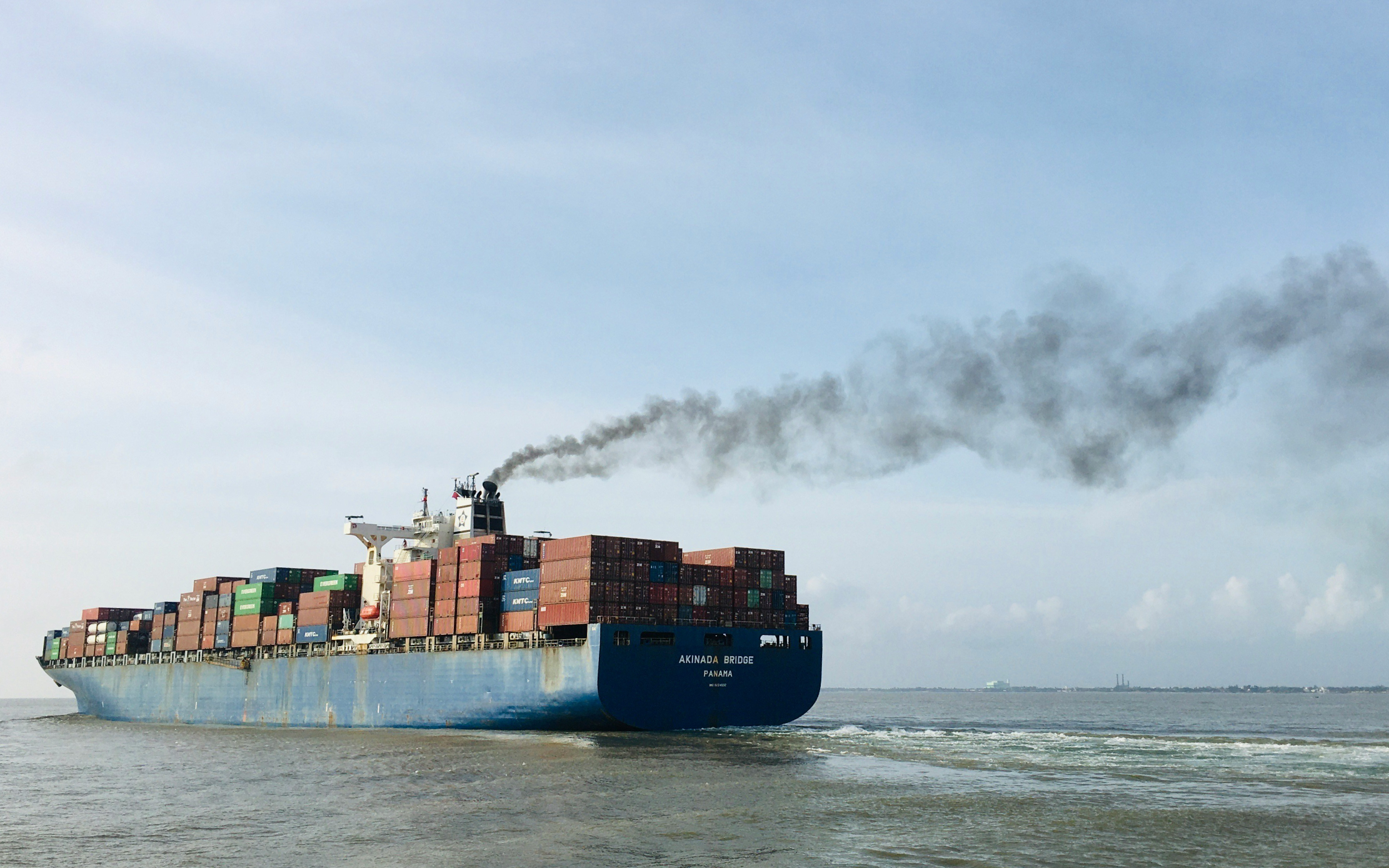
In the maritime industry, vessels sometimes rush to their destination without berths available to accommodate them, forcing them to drop anchors and idle. Instead of rushing with higher speed, burning more fuel and then raking up emissions while idling, more precise and just-in-time vessel arrivals can be enabled by artificial intelligence (AI) models that help predict fuel consumption and optimise voyage routing. Ship operators can adjust their speed to conserve fuel while still sticking to schedules.
“By taking weather and sea state changes into account, advanced fuel prediction models allow operators to plan routes based on efficiency and prioritise long-term carbon intensity indicator (CII) management over the long run, rather than simply selecting the shortest path,” said Xiuju Fu, a Senior Principal Scientist at the A*STAR Institute of High Performance Computing (A*STAR IHPC). While these models perform well in the lab, maintaining their accuracy at sea remains a challenge. The maritime operational environment remains plagued with sensor inaccuracies, signal transmission gaps and poor data quality.
To address these limitations, researchers from A*STAR IHPC and Nanyang Technological University, Singapore, developed the Maritime AI Digital Testing Capability framework for evaluating the performance of such prediction models. “Improving model robustness against noise directly impacts voyage safety, efficiency and long-term CII management,” added Fu.
Their knowledge-based noise testing approach acts as a “stress test designed using maritime expertise rather than just random math,” according to Fu. Instead of indiscriminately adding noise across all inputs, the team introduced it selectively to parameters where it would realistically occur, such as wind conditions and vessel speed. The type of noise was also matched to each variable, while static parameters like ship size remained unchanged.
Using more than 11,000 records gathered from 32 vessels over 18 months, the researchers tested two algorithms widely used for training fuel consumption prediction models: the Domain Knowledge Artificial Neural Network (DK-ANN) and the Bi-directional Long Short-Term Memory (Bi-LSTM).
The team discovered that even modest additions of noise to vessel speed data led to large drops in prediction accuracy for both algorithms. Additionally, white noise—commonly found in electrical signals and communication systems—significantly disrupted DK-ANN performance, while Bi-LSTM was sensitive to fluctuations in wave period, often driven by wind conditions.
“Our findings imply that developers should include robustness testing as a standard part of the AI development lifecycle for maritime applications,” said Fu.
The researchers now aim to extend their framework to other maritime AI applications. For instance, differences between predicted and actual consumption could be early signs for engine maintenance needs. Beyond individual voyage decisions, Fu explained that these prediction models can enable better risk management for estimating overall operating costs and support decarbonisation goals by calculating the carbon footprint of the entire maritime logistics chain.
Ultimately, the team envisions that the Maritime AI Digital Testing Capability framework could form the foundation for a comprehensive validation system to ensure safer and more energy-efficient marine voyages.
The A*STAR-affiliated researchers contributing to this research are from the A*STAR Institute of High Performance Computing (A*STAR IHPC).


