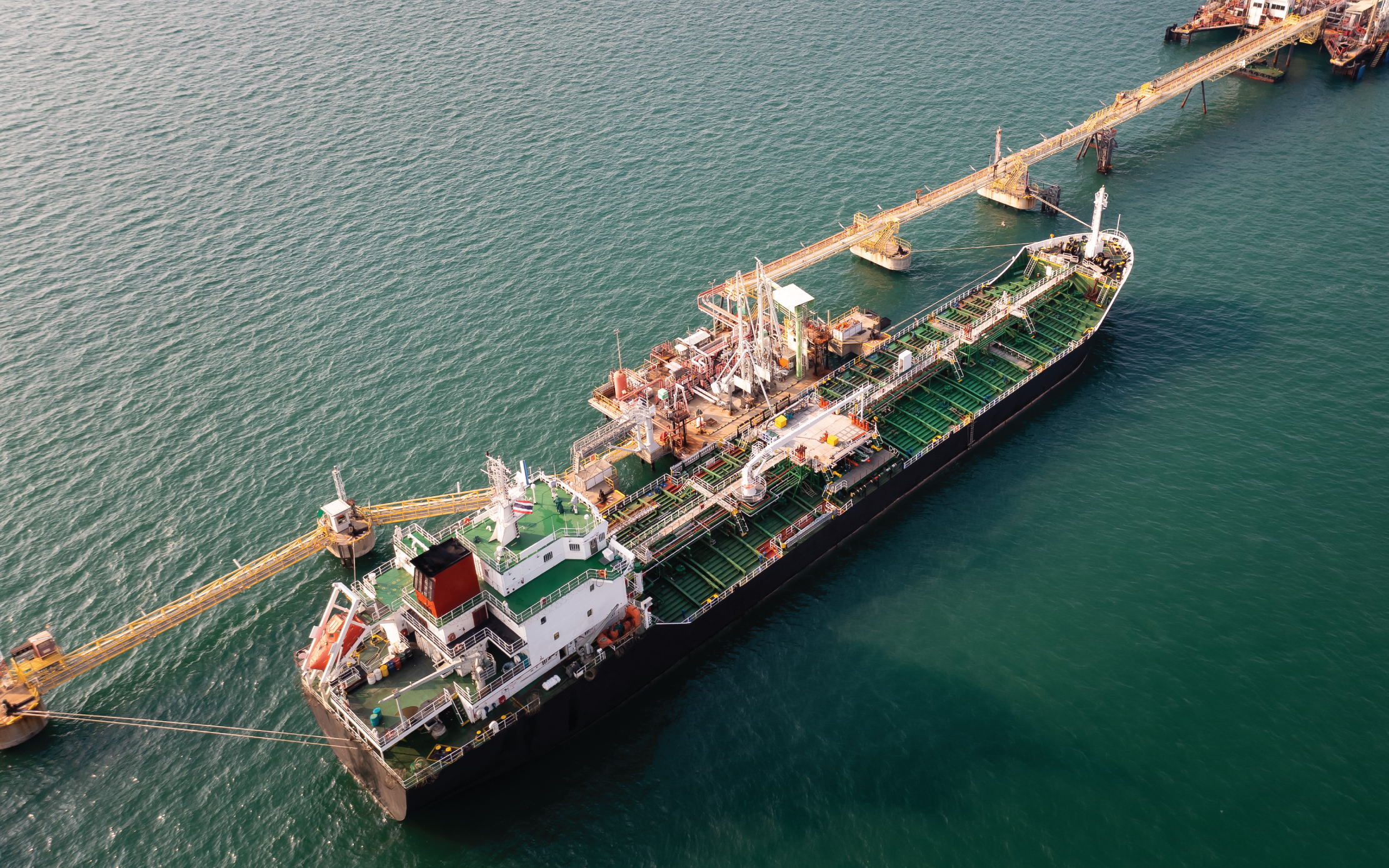
While electric cars are now an everyday sight on land, electric ships may take longer to ply the oceans, as the world’s ports and vessels are still built around the storage, supply and use of liquid fuels. To help cut carbon emissions in the interim, the shipping industry is exploring alternative lower-carbon fuels such as liquefied natural gas (LNG), ammonia and methanol, which can be adapted to existing infrastructure for maritime refuelling (bunkering).
However, these fuels have their own unique safety challenges. “Unlike most conventional fuels, alternative fuels are typically gaseous under atmospheric conditions,” said Vinh-Tan Nguyen, an A*STAR Institute of High Performance Computing (A*STAR IHPC) Senior Principal Scientist. “For efficient storage and transport, they’re stored under high pressures and low temperatures that keep them in a liquified state. This means when accidental leaks occur, they can release rapidly expanding gas plumes; sometimes highly flammable and sometimes toxic, endangering a wide area.”
Not all ejected fuel immediately vaporises during a leak. The liquid portion, known as rainout, could play a crucial role in understanding a leak’s overall severity. To help with bunkering safety protocols for alternative fuels, Nguyen, A*STAR IHPC Scientist Raymond Quek and A*STAR IHPC colleagues have been developing a fluid dynamics model to rapidly estimate rainout fractions from leaks as they happen.
“Rainout refers to the mass of fuel ejected as liquid from a leak. The presence of rainout means that the mass of fuel ejected as gas is reduced, making the resulting hazardous plume smaller and less concentrated,” said Quek. “Therefore, quantifying rainout allows a more accurate estimate of the facility area affected by the plume, which helps with the efficient designation of safety zones.”
Quantifying rainout can be challenging given the variable infrastructure and operating conditions in bunkering facilities. Leaks also involve complex, fast-changing processes and depend on detailed parameters that are often unknown or unavailable. As such, most existing models for rainout estimation are either too complicated, data-intensive or uncertain for rapid safety assessments.
To address this challenge, Nguyen, Quek and A*STAR IHPC colleagues teamed up with the A*STAR National Metrology Centre (A*STAR NMC) and maritime engineering company Seatrium (formerly known as Sembcorp Marine) to create a simplified rainout estimation model that requires only minimal inputs, including storage pressure, ambient temperature and basic fluid properties.
“We were motivated to create a universal model that is transparent, easily understood and applicable to a wide range of alternative fuels,” said Quek, the study’s first author. “By avoiding complex and abstract calculations, the model can be easily used by port workers and engineers. This is especially useful if a quick estimate is urgently required in the event of a leak.”
The team validated their model against published results for hydrogen, LNG, ammonia and butane leaks, and found that it demonstrated reliable order-of-magnitude predictions for rainout across a wide range of fuels and leak conditions.
“This model could enable more accurate plume sizing, which would help improve facility design, mitigation planning and operational decision-making at ports handling alternative fuels,” said Nguyen.
The A*STAR-affiliated researchers contributing to this research are from the A*STAR Institute of High Performance Computing (A*STAR IHPC) and A*STAR National Metrology Centre (A*STAR NMC).