


The secret to the fluffiness of whipped cream and meringues lies in networks of tiny air bubbles within their structure. While such aeration is typically achieved using egg whites and dairy proteins, researchers like Siew Bee Ng are now exploring plant proteins as more sustainable, allergen-free substitutes to recreate that foamy texture.
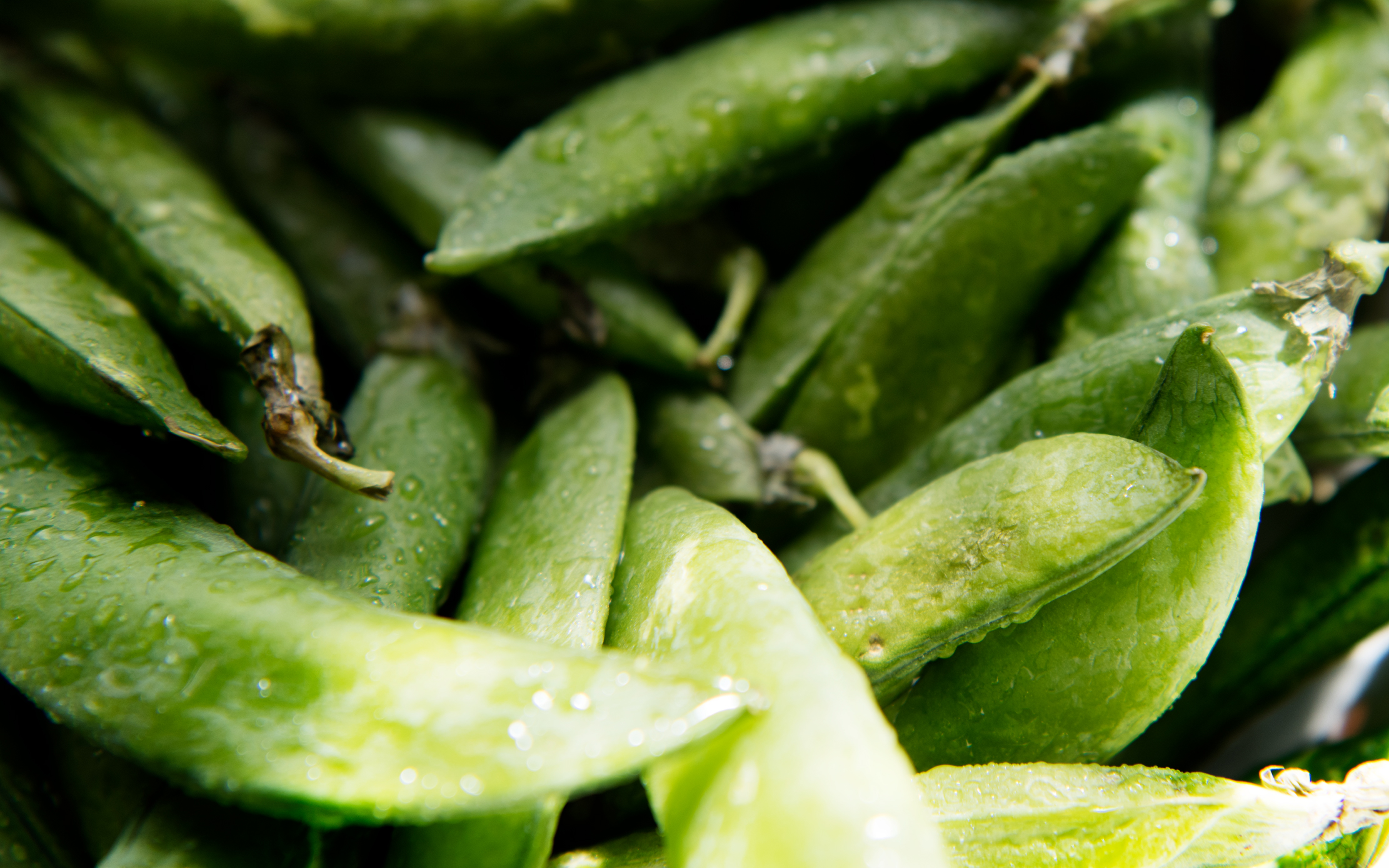
Ng, a Principal Scientist at the A*STAR Singapore Institute of Food and Biotechnology Innovation (A*STAR SIFBI), and colleagues made a striking observation while washing snap peas: the peas released a sticky liquid that produced surface bubbles. However, they reasoned that the bubbles could not be caused by most pea proteins, whose rigid and tightly packed molecular structures impede effective foaming.
Unlike yellow or green peas, snap peas are eaten with the pods, prompting the researchers to consider the whole pod as an unexplored protein source for aerated foods. They suspected that the protein responsible might be RuBisCO (ribulose-1,5-bisphosphate carboxylase/oxygenase), a highly abundant protein found in green leaves that is also present in snap pea pods. In plants, RuBisCO plays a critical role in processing carbon dioxide during photosynthesis.
Of particular interest to the team was how the protein’s physical shape could allow it to form thick, long-lasting foams. When a liquid containing RuBisCO is whipped, air is forced into the mixture as the plant proteins move to the borders of the bubbles. “The proteins uncoil so their water-hating sides face the air while their water-loving sides stay in the liquid, linking together to form a strong, elastic ‘net’. This net traps the air bubbles, preventing them from popping or merging together,” explained Ng.
To quantify this foaming ability, the researchers used an in-house protein functionality screening method and compared protein concentrates extracted from whole snap peas, including the pods, with egg white and mung bean equivalents. “Our miniaturised assays use much smaller sample quantities, while maintaining strong correlation with conventional tests,” said Jordy Kim Ung Ling, a Scientist at A*STAR SIFBI.
At neutral pH, the snap pea concentrates showed comparable foaming capacity to egg white proteins and better emulsifying ability than mung bean proteins. Meanwhile, protein analyses confirmed that RuBisCO was enriched in the foam layer.
The team then incorporated the snap pea protein extract into a fat-free whipped cream formulation that achieved a 255-percent overrun—a measure of how much the cream’s volume increased as air was incorporated during whipping. Moreover, the cream held its shape for one hour.
Although the results show the potential of snap pea protein concentrates as an alternative foaming agent, Ng noted that further optimization of the formulation and processing conditions, ranging from protein concentration to whipping speed, is needed to improve both overrun and stability.
The A*STAR-affiliated researchers contributing to this research are from the A*STAR Institute of Molecular and Cell Biology (A*STAR IMCB) and A*STAR Singapore Institute of Food and Biotechnology Innovation (A*STAR SIFBI).


