
 Awards programme recognises three women scientists for their exceptional contributions to neuroscience, infectious diseases and RNA therapeutics.&picture=https://research.a-star.edu.sg/wp-content/uploads/2026/03/arp-51-for-web-upload-wtx127-fwis-feature.jpg)


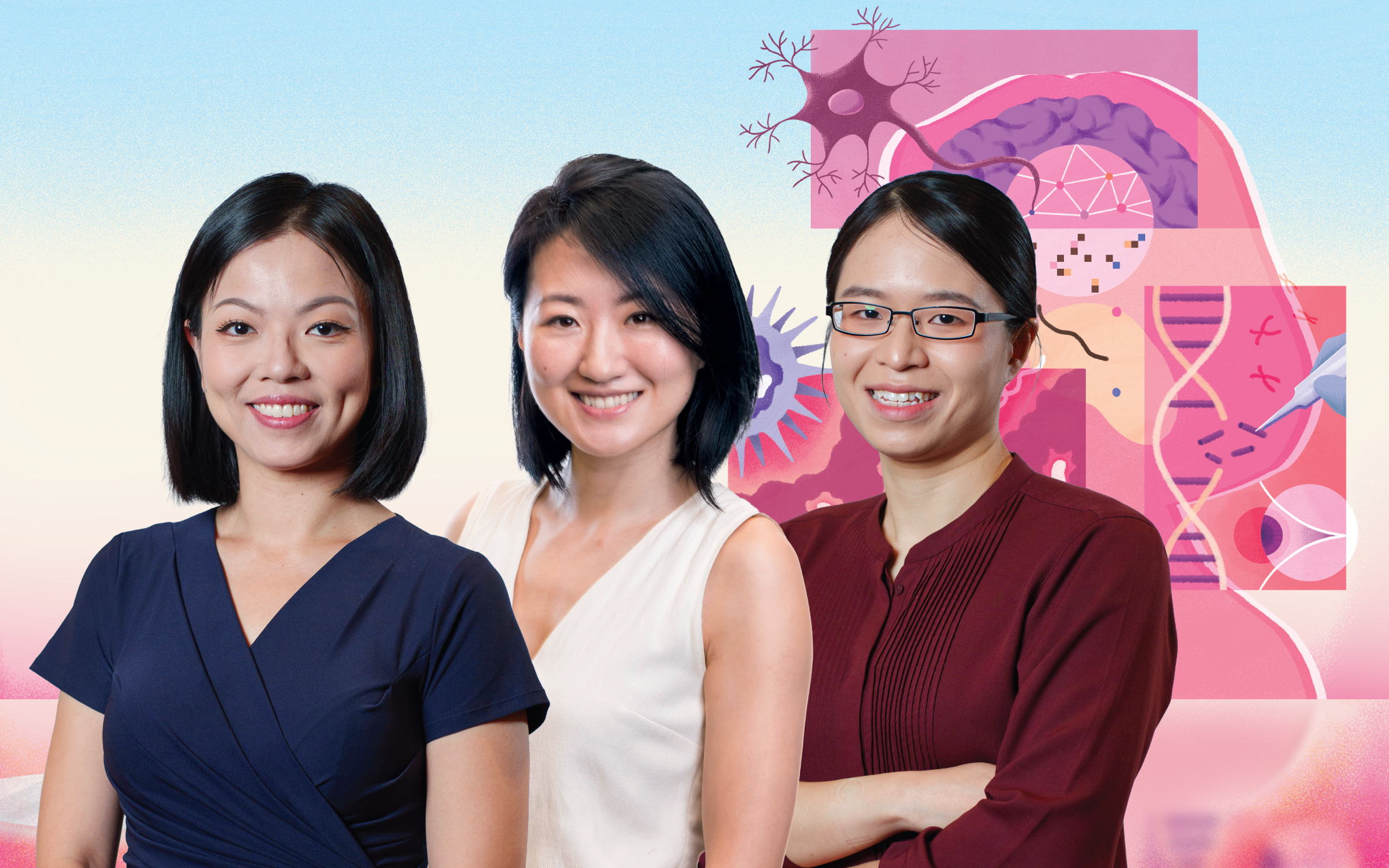
Science is often described as a relay race of discovery, but for many women in science, it can also be a path they must actively carve out for themselves. As these individuals tackle challenges ranging from the intricate wiring of the human brain to the arms race against antibiotic-resistant microbes, their pursuit of knowledge demands not just scientific aptitude, but resilience, perseverance and clarity of vision.
This year, three outstanding researchers—two from A*STAR and one from the National University Hospital—have been recognised by the L’Oréal-UNESCO For Women in Science 2025 (Singapore) Awards programme for their exceptional contributions at the frontiers of neuroscience, infectious diseases and genetics. Since its launch in 1998, the programme has celebrated exceptional women scientists across Southeast Asia, honouring their scientific achievements while championing their roles as leaders in the global research community.
The three recipients represent distinct yet interconnected areas of biomedical science. At the A*STAR Genome Institute of Singapore (A*STAR GIS), Principal Scientist Jinyue Liu investigates the molecular basis of human brain function, developing genomic tools to advance our understanding of brain health. At the National University Hospital, Singapore, infectious diseases consultant Yin Mo spearheads the fight against antimicrobial resistance, building clinical trial networks across Asia to inform lifesaving treatments. And at the A*STAR Institute of Molecular and Cell Biology (A*STAR IMCB), Senior Scientist Beverly Mok is developing programmable RNA therapeutics, designing precise molecular editors to restore vision in patients with degenerative eye conditions.
In this feature, A*STAR Research speaks with these scientists about their scientific journeys, defining milestones, perspectives on leadership and community-building, and advice for the next generation of scientific leaders.

Jinyue Liu
Principal Scientist
Laboratory of Single-cell Spatial Neuromics
A*STAR Genome Institute of Singapore (A*STAR GIS)
1. What first piqued your interest in brain wiring?
I’ve always been fascinated by the different ways in which people think, feel and respond to the world. That curiosity naturally led me to wonder how billions of brain cells converge to create such unique inner lives. Early in my scientific training, I learned that brain cells don’t connect at random; rather, they follow molecular cues that guide their movements and partnerships. I was captivated by the elegance, precision and dynamism of these processes, even at the level of individual cells and synapses.
As I delved deeper, I realised that the brain’s remarkable cellular diversity must be matched by an equally intricate ‘instruction manual’ guiding its assembly. I wanted to understand how different cell types establish specific patterns of connectivity, and how these processes go awry in disease.
However, current tools for mapping even a small part of the brain’s ‘connectome’ can’t keep pace with the health challenges society faces. That gap is why I’ve dedicated my career to building molecular tools that can more effectively connect the dots between brain cells, and to applying these tools to improve brain health.
2. What key moments shaped your neural circuits research?
My earliest ‘aha’ moment happened during my undergraduate dissertation research, when I uncovered an exciting new result with my own hands. It showed me that even something as complex as the central nervous system could be deciphered through careful experimentation. That experience ignited my passion for studying the brain.
Another defining moment for me happened during my PhD degree, when I molecularly manipulated the growth of retinal neurons and watched them wire themselves differently in real time. The work was later cited in a foundational neuroscience textbook now used widely in universities. It was deeply humbling to know that my work would contribute to how future generations understand brain wiring.
As I concluded my PhD training, I also witnessed my mentors usher in the single-cell genomics era, which fundamentally transformed how we investigate brain development and disease. These high-resolution approaches now form the core of my lab’s toolkit, allowing us to study how diverse brain cell types are organised, connected and altered across different brain conditions and patients.
3. What scientific contributions are you most proud of?
My team develops frontier genomics technologies that assign each brain cell its own molecular ‘QR code’. These allow our team to trace neural connections using advanced imaging genomics and artificial intelligence (AI). By pairing these tools with patient-derived brain organoids—tiny, lab-grown models of the human brain—we can now study neurological conditions in ways that were previously impossible.
The insights from these technologies can bring us closer to earlier diagnoses, more targeted interventions and healthier ageing for everyone, especially in societies like Singapore’s that face rapid population ageing and low birth rates. Beyond improving wellbeing and healthspan, I hope our work will foster greater awareness and acceptance of neurodivergence, helping society appreciate the diversity of how human brains are wired.
4. How has this award impacted your views on science leadership?
Half of the world’s population is female. As such, bringing visibility to the contribution of women in science while fostering inclusive teams will only drive better research and elevate what the scientific community can achieve together.
It’s important that the next generation sees diverse women succeed and take on leadership positions. Young trainees need role models; they need to know that they can build a future and make a difference in science. For me, this award is a humbling reminder to keep enabling others through mentorship, advocacy and the creation of spaces where curiosity and ambition can thrive.
5. What advice would you give to young women scientists?
Don’t let uncertainty stop you from stepping into spaces where you feel underprepared. Growth often comes from saying ‘yes’ before you feel ready and pursuing the questions that matter. Give yourself a chance!
Also, as every scientific journey is unique, seek out mentors and friends who can support different aspects of your path—find your tribe. Learn from those who have gone before, but don’t be afraid to chart your own course and discover what matters most to you.

Yin Mo
Infectious Diseases Consultant
National University Hospital, Singapore
1. What led you to study antimicrobial resistance?
I trained as a clinician in infectious diseases and very early in my career, I saw patients die not because we lacked the skills to treat them, but because we lacked antibiotics that worked. Those moments stayed with me. Antimicrobial resistance (AMR) is not an abstract global health threat: it is something clinicians like me confront daily in intensive care units, emergency departments and hospitals across Asia.
Over time, I realised that the regions most affected by resistant infections often have the least access to new antibiotics, diagnostics and research infrastructure. That inequity became a powerful motivator for me to build clinical trial networks throughout the region and generate the data needed to treat patients better. AMR became the focus of my work because it brings together science, policy, public health and human stories; an intersection that needs the most urgent attention.
2. How has your approach to science evolved?
I’ve always viewed clinical research as a form of objective journalism: an effort to illuminate important problems with data, clarity and honesty. As a clinician, the questions I ask always begin at the bedside—with real patients, real infections and real gaps in evidence.
Over time, I realised that my strength lies not only in conducting research, but also in bringing together experts from different disciplines—microbiologists, modellers, statisticians, clinicians and policymakers—to tackle problems that no single domain can solve alone.
Working in Asia has also deeply shaped my approach. Singapore is uniquely positioned as a regional hub: scientifically strong, operationally reliable and closely connected to countries where the burden of AMR is highest. This environment has enabled me to build collaborative clinical trial networks, run large pragmatic studies and generate data that directly improves patient outcomes.
Overall, my scientific journey has evolved from answering isolated questions to building systems and partnerships capable of addressing the questions that matter most.
3. In your view, what aspects of your work make the most meaningful impacts?
There are three aspects thereof. First, we’re building Asia’s largest pragmatic clinical trial networks, enabling low- and middle-income countries to participate in high-quality research and shape global AMR solutions.
Secondly, we’re generating data where none previously existed, through real-time resistance surveillance and multi-country studies such as the ‘Clinically-Oriented Antimicrobial Resistance Surveillance Network for Healthcare-Associated Infections’ (ACORN-HAI) and ‘REducinG Antibiotic tReatment Duration for Ventilator-Associated Pneumonia’ (REGARD-VAP) studies. Findings from these studies directly inform treatment guidelines and improve clinical care.
Lastly, we’re investing in sustainable research ecosystems—from training young investigators to establishing regional partnerships that continue long after individual grants end.
Ultimately, the impacts that matter most to me are those that help ensure the places bearing the highest AMR burden also help shape the science designed to address it.
4. How has this award shaped your STEM perspective?
This recognition reinforces the responsibility I feel not only to advance AMR science, but to ensure that women—particularly in Asia—are visible and central to these efforts. It motivates me to mentor young scientists, especially women, and to continue advocating for equitable research partnerships across Asia.
The award also provides a platform to draw attention to an issue that often remains invisible until it’s too late. More broadly, it reminds me that scientific leadership is not just about generating evidence; it’s also about building communities, uplifting others and bringing multidisciplinary voices together to address global challenges.
5. What advice would you give to young women scientists?
First, build your own community. Science is a long journey, and the mentors and peers who walk alongside you shape your confidence, resilience and imagination. Trust the depth of your curiosity—it is your strongest compass.
We don’t need to fit into pre-existing models of leadership. We can lead with clarity, kindness and determination, and in our own voice. Science needs more women who lead as themselves.

Beverly Mok
Senior Scientist
A*STAR Institute of Molecular and Cell Biology (A*STAR IMCB)
1. What sparked your interest in inherited retinal diseases (IRDs)?
My interest in genetic therapies began during my PhD degree, where I worked on precise methods to correct DNA mutations—the root cause of many debilitating genetic diseases—while avoiding undesirable editing byproducts. While others in the same lab pioneered technologies such as base editing and prime editing, I focused on developing a mitochondrial DNA base editor.
When I returned to Singapore for my postdoctoral studies, I wanted to continue advancing nucleic acid editing methods, but I also needed a relevant disease model that could turn the platform into a therapeutic potential. Through a collaboration with the Translational Retinal Research Laboratory at A*STAR IMCB, I began exploring RNA editing to correct mutations linked to a common form of macular dystrophy—a condition that affects the eye’s central field of vision.
Through this work, I came to understand how mutations in different retinal cell types can lead to irreversible vision loss. Vision is often considered one of our most important senses; while progressive vision loss isn’t life-threatening, it profoundly diminishes quality of life. To complement emerging approaches such as retinal implants, which depend on remaining healthy photoreceptors, we became interested in correcting disease-associated mutations directly, with the aim of restoring cell function and preventing further degeneration in IRDs.
2. How has your approach to genetic therapies evolved?
My PhD training at Harvard University, US, exposed me to Boston’s thriving biotech hub—an established network of academics, entrepreneurs, venture capitalists and legal teams working together to translate science into real-world solutions. There is a strong appreciation for basic science in this environment, alongside substantial public and private support for developing technologies that tackle unmet medical needs.
As a technologist, I rely heavily on biologists and clinicians to validate whether a technology is useful and efficacious in biologically relevant models. My time at Harvard taught me the importance of forging these collaborations at an early stage of R&D, ensuring that any platform I aim to develop addresses a critical medical need.
Back in Singapore, I’ve been fortunate to receive strong institutional support from A*STAR IMCB and the broader R&D ecosystem to guide my research towards translation. Beyond ensuring scientific rigour, my collaborators and stakeholders also provide valuable market and regulatory insights. Through this collective effort, I hope we can build a successful RNA reprogramming platform that benefits patients with inherited retinal diseases, and potentially other debilitating genetic conditions.
3. Which parts of your RNA work feel most meaningful to you?
We’re still in the early stages of building an RNA reprogramming platform, with the goal of advancing it over the next three to five years. The validation studies using human patient-derived iPSC-RPE* models feel especially meaningful, as not all observed RNA corrections lead to meaningful outcomes.
By performing RNA sequencing on treated iPSC-RPEs, we study molecular signalling pathways that are differentially regulated following RNA correction. These pathways—which can be interpreted as disease-associated gene signatures—illuminate new pathways implicated in IRDs. Understanding the biological mechanisms underlying these pathways may reveal new druggable therapeutic targets.
4. What does this award mean to you?
I’m deeply humbled by this recognition and would like to thank L'Oréal-UNESCO for affirming our work. I would also like to acknowledge the many mentors and collaborators whose support has shaped my scientific journey. Looking ahead, I hope to deepen my collaborations with clinicians and find opportunities to work with RNA experts as we continue building our RNA editing platform.
5. What advice would you give to young women scientists?
Surround yourself with mentors and peers who offer honest advice, constructive feedback and opportunities to expand your professional network. At the same time, remember that science often involves failure, sometimes as much as 99 percent of the time. But each of those failures can still be informative. Persevere, stay curious and keep working towards that one percent—it can make all the difference.
*iPSC-RPE: induced pluripotent stem cell-derived retinal pigment epithelial cells


