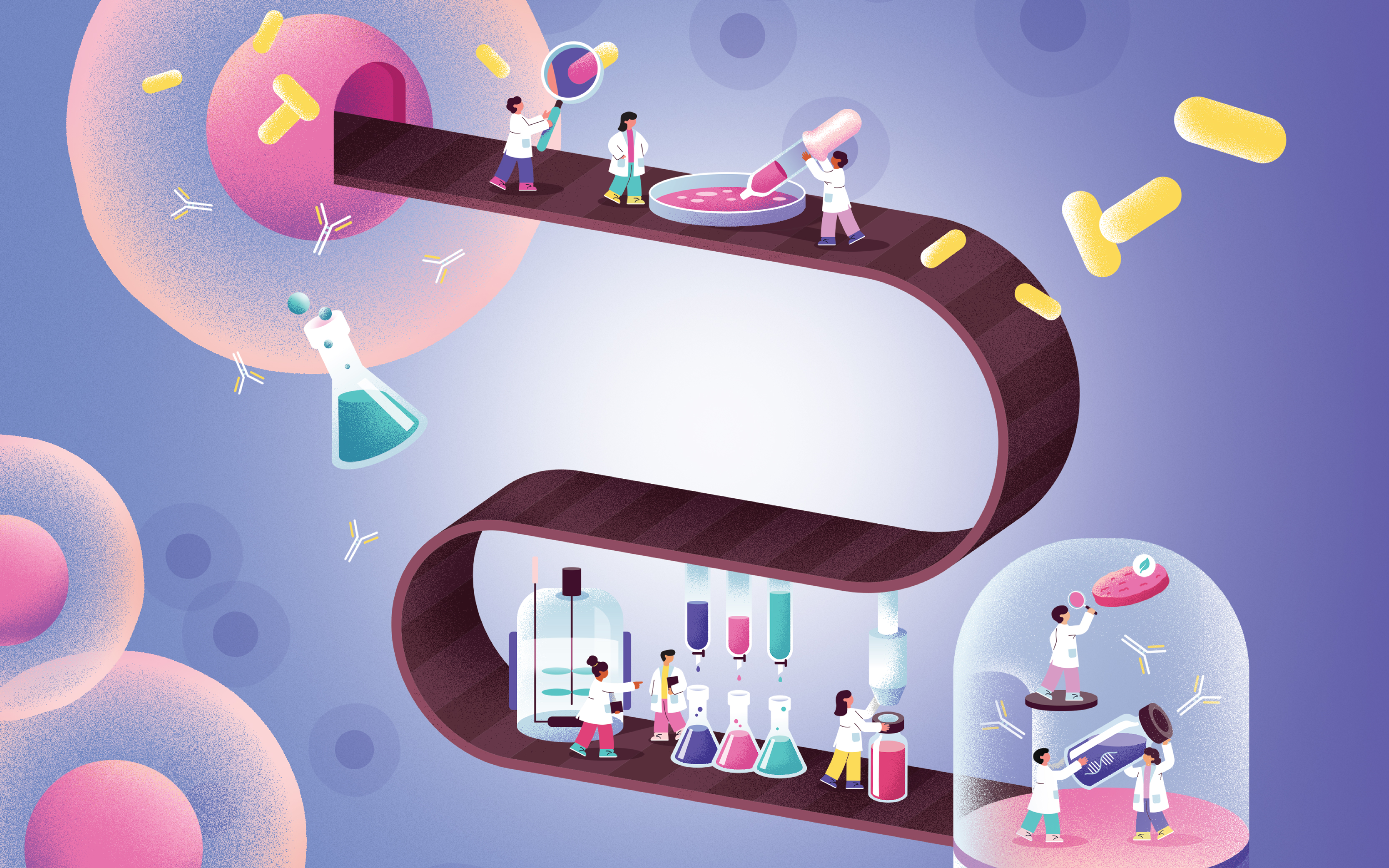
Over several decades, Singapore has solidified its leading position in both the biomedical sciences and advanced manufacturing. The nation-state now stands as a global biomanufacturing powerhouse, housing over 60 plants dedicated to bio-based products and attracting more than S$4 billion in investments in 2025.
To support this growing bioeconomy, dedicated infrastructure has laid the necessary foundations. Across the Biopolis campus in Singapore’s one-north precinct, strong links between public and private research institutes have created an assembly line from basic life science research to practical biotech innovations. At the island’s western end, the Tuas Biomedical Park offers purpose-built facilities that have drawn global biopharmaceutical firms to establish themselves on local shores.
The silent engine powering this booming industry is bioprocessing, which harnesses the power of living systems to synthesise bio-based products. Since 1990, research hubs such as the A*STAR Bioprocessing Technology Institute (A*STAR BTI) have been pushing not only the frontiers of bioprocessing itself, but of the scalable end-to-end technologies in data analytics, automation and commercial-scale process design that successfully move such innovations from labs to factories.
“Biomanufacturing has come a long way, with advances in molecular and digital technologies enabling the production of complex biological products at larger scales and with improved consistency,” said Boon Tong Koh, A*STAR BTI Executive Director. “Our research capabilities have grown alongside the industry’s needs.”
Today, interdisciplinary teams at A*STAR and associated partners are at the heart of bioprocessing and biomanufacturing value chains that are scaling research breakthroughs into transformative real-world products. In tandem with strategic investments in tech and talent development, these have made Singapore a globally recognised biomanufacturing launchpad, leading to tangible gains in healthcare solutions, industrial innovation and economic resilience.
Biologics: From science to supply
Some of today’s most desirable biomanufacturing products are biologics: complex therapeutics derived from or generated within living cells. From antibody proteins to message-carrying nucleic acids, biologics can be potent alternatives to conventional chemically synthesised drugs and vaccines in fighting new and complex diseases.
A biologic’s journey to the clinic usually begins with finding a promising treatment target—such as a critical protein a virus depends on—and developing a biomolecule aimed at that target. Then, cells or microbes are engineered into biological ‘factories’ that can produce that molecule at scale in specially designed bioreactors. Their outputs are then purified over several stages before being formulated into biologics.
To ensure biologics are as safe and clinically effective as possible, yet produced efficiently enough for mass distribution, every stage of biologics bioprocessing and biomanufacturing requires significant optimisation. In this area, A*STAR’s research ecosystem spans the entire innovation pipeline, from discovery and process development to manufacturing and scale-up.
1. Making foundational findings
A biologic’s first step is discovery: a famously difficult task that can involve screening up to thousands of molecules for one that hits the mark. Of these, only 1 to 2 percent will obtain regulatory approval as medicines, even after long, complex and costly drug development processes.
Beating those odds, EBC-129, Singapore’s first-ever antibody-drug conjugate (ADC), successfully cleared the drug development pipeline in a major multi-institutional effort between A*STAR BTI, the National Cancer Centre Singapore (NCCS) and Experimental Drug Development Centre (EDDC). Designed to attack cancer cells while sparing healthy tissue, an ADC is a powerful link-up between a highly selective antibody that latches onto and enters cancer cells, and a toxic drug payload that destroys those cells from within.
“They’re like a magic bullet,” said Andre Choo, A*STAR BTI Deputy Executive Director. “Their combination of specificity and potent cell-killing ability makes them more precise and less harmful than typical cancer treatments.”
A*STAR BTI and NCCS researchers first discovered the antibody GR6A04, which binds to the CEACAM5/6 proteins abundantly found on cancer cell surfaces. Unlike other CEACAM-targeting drugs in development, GR6A04 targets specific sugar-binding sites on CEACAM5/6 that are exclusively present on cancer cells. Leveraging A*STAR BTI’s bioprocessing value chain and antibody development capabilities, the team was able to scale up manufacturing of the antibody for further characterisation.
Next, through an A*STAR BTI-EDDC co-development programme, the team carried EBC-129 through preclinical and Chemistry, Manufacturing and Controls (CMC) development—including Good Manufacturing Practice (GMP) and toxicology studies—before advancing to clinical trials, for which EDDC led initiation and regulatory submissions.
In 2023, EBC-129 was approved by the United States Food and Drug Administration (US FDA) and Health Sciences Authority Singapore to initiate clinical trials. This was followed by its Fast Track Designation as a pancreatic ductal cancer therapeutic from the US FDA in 2025.
“EBC-129’s success exemplifies how drug discovery is a team sport, uniting experts across the continuum for a common and larger purpose,” remarked Choo. “Through this journey, we’ve also built a cadre of people with the experience to support future drug development programmes.”
2. Refining production
Biologics production also requires ‘cell factories’ that offer high yields, stability and quality of valuable biomolecules at large scales. However, living cells are less predictable than machines. Just as a class of bakers given the same recipe may produce cakes of different qualities at different speeds, a batch of cells transfected with the same plasmid vectors—genetic vehicles which ‘deliver’ recipes for a desired product into cells—can vary in output.
Typically, cell line development (CLD) selects the best candidate cells for biomanufacturing by painstakingly sifting through hundreds of thousands of clones. To streamline the process, A*STAR BTI Cell Line Development Group Leader Yuan Sheng Yang and colleagues have developed a multicistronic second-generation CLD platform which not only improves how genetic ‘recipes’ are delivered to cells, but also helps embed these instructions more effectively into each cell’s genetic blueprint, allowing them to be followed more reliably to create a larger pool of competent ‘baker’ cells to choose from.
“Through an optimised plasmid vector and targeted integration system, our platform generates stably transfected pools where most cells express antibodies at high titres for a long term,” said Yang. “This means optimal cell lines can be efficiently identified by screening relatively less clones; fewer than 100 in some cases.”
Designed for Chinese hamster ovary (CHO) cells—a widely used cell line—the platform’s multicistronic nature also enables more complex, multi-specific biologics. Transfected with a single DNA strand carrying multiple genetic instructions, a customised CHO cell line can synthesise multiple antibody chain types in specific ratios, or express multiple enzymes for tailoring ADC structures.
3. Conducting the downstream
Once produced in bioreactors at scale, desired biomolecules need to be purified from production cells before they can be formulated into medicines. From filtration to chromatography, a series of downstream processing operations must be synchronised like an orchestra even as each step calls for different reagents, conditions and equipment settings. As this stage can take a substantial fraction of biomanufacturing costs and time, optimisation through process intensification is key.
“However, intensification doesn’t simply mean running the whole process faster,” explained Wei Zhang, Group Leader of Downstream Processing at A*STAR BTI. “It’s about holistically reviewing and deliberately redesigning the process to maximise production efficiency while achieving high productivity, quality and purity.”
As an example, Zhang pointed to chromatography, a technique that separates biomolecules based on their physicochemical properties. Unlike conventional batch chromatography, continuous chromatography uses multiple columns in succession to enable uninterrupted purification and improve product consistency.
“Continuous processing also depends on reliable and robust Process Analytical Technology (PAT) to monitor critical process parameters (CPPs) and a product’s critical quality attributes (CQAs), enabling real-time feedback and rapid decision-making,” said Zhang. “Since deviations in one stage can affect the entire workflow, it must be sufficiently flexible and resilient, equipped with risk mitigation and process control strategies.”
With innovations in real-time monitoring as the goal, Zhang’s team and their A*STAR BTI colleagues are developing and assessing PATs for various unit operations, including in-line and at-line analytics that evaluate CPPs and CQAs as products move along the workflow.
4. Expanding novel modalities to therapies
In this space, the Nucleic Acid Therapeutics Initiative (NATi) brings together scientists and industry veterans with experience from the science behind medicines, to how they are developed, manufactured, protected by patents, approved by regulators and brought to market. Combining expertise in mRNA vaccines and immune-modulating therapies, NATi aims to advance next-generation RNA medicines beyond infectious diseases as well as innovative oligonucleotide drugs.
NATi is funding research across Singapore to develop stable, broadly applicable mRNA medicines. Its mRNA therapeutics are not limited to pandemic vaccines, but also cover a wider range of conditions, such as improving how lipid nanoparticles carrying mRNA medicines interact with the immune system to unlock more precise applications.
Beyond mRNA, NATi is also developing synthetic oligonucleotides, which complement mRNA’s ability to influence biological signals. Together, these technologies provide more precise control over disease processes and support developing more flexible, targeted treatments.
Through its Accelerator programme, NATi also supports high-risk, high-reward biomedical research. “NATi operates like a biotech company with a venture arm. We develop competitive technologies and grow new businesses in peacetime, while remaining ready to redirect resources towards national health priorities during emergencies,” said Mohamed ElSayed, NATi Executive Director.
Hilleman Laboratories, a vaccine research organisation established through a joint venture between US pharmaceutical company MSD and UK charity foundation Wellcome Trust, is among the organisations that engage with Singapore's biomanufacturing and innovation ecosystem, which includes initiatives such as NATi.
Guided by a mission to translate strong science into products with a line of sight to affordable manufacturing and equitable access—particularly for low- and middle-income countries—Hilleman works with a range of partners across the ecosystem, including A*STAR BTI, to help advance the translation of scientific innovation into scalable manufacturing solutions for global health.
Raman Rao, Hilleman’s Chief Executive Officer, commented that as Singapore’s ecosystem consistently prioritises quality, talent and trusted regulatory standards, its infrastructure, connectivity and pro-innovation policies can help speed up ideas into public health-ready products.
“That matters because preparedness is not something switched on in a crisis, but built and tested continuously,” Rao added. “Vaccines don’t save lives simply when they exist, but when they can be produced reliably, transported through existing supply systems, and administered quickly at points of need. As such, we need resilient systems that can keep learning, improving and delivering across multiple diseases over time.”
Beyond medicines: Scaling towards sustainable industry
Biomanufacturing routes can also lead to specialty chemicals and valuable ingredients for industries beyond healthcare. These include terpenes: plant chemicals essential to consumer care products from vitamin supplements to fragrances.
As with biologics, a promising alternative lies in metabolically engineering microbes to produce the same molecules directly. In this space, Xixian Chen, a Junior Group Leader at the A*STAR Singapore Institute of Food and Biotechnology Innovation (A*STAR SIFBI)'s Biotransformation and Engineering Department, made a breakthrough with her colleagues by developing a new production method for cis-α-irone, a terpene fragrance component of orris root oil with a market price above US$15,000/kg.
Typical cis-α-irone production involves vast tracts of land paired with years of plant cultivation and processing, while attempts at metabolic engineering have been stymied by knowledge gaps about the biosynthetic pathways involved. To bypass this, the team engineered a pathway in Escherichia coli bacteria that starts with simple feedstocks to derive a known precursor and transform that to cis-α-irone—akin to detouring off a blocked road and returning to it at a later point.
“Our process was over 4,000 times more efficient than the traditional extraction route, successfully producing pure cis-α-irone in a bioreactor,” said Chen.
The team’s scalable terpene platform is being commercialised through A*STAR pre-spinoff AlterING, co-founded by Chen and A*STAR SIFBI Principal Scientist Simon Congqiang Zhang.
“AlterING seeks to harness biology to transform how chemicals are produced, enabling more sustainable manufacturing while supplying ingredients that are gentle on people and kind to our planet,” Chen added.
Besides reducing the need for petrochemicals, biomanufacturing can further shrink the chemical industry’s carbon footprint by making use of waste streams and untapped low-cost materials. As such, researchers led by Yee Hwee Lim, Director for Specialty Chemicals and Bio-Technologies at the A*STAR Institute of Sustainability for Chemicals, Energy and Environment (A*STAR ISCE2), aim to expand the range of chemical reactions that biological systems can perform.
The team’s Platform for Reversible Omics of Genes and Molecules (PROGeM) uses a combined protein and chemical language model to simulate how the molecular instructions encoded in a microorganism’s genome contribute to feasible biochemical processes and products, and vice versa.
“We can rapidly scan diverse kingdoms of life, from bacteria to plants, to find the enzymes or microbial strains best suited to produce a specific chemical,” said Lim.
This data-driven search feeds into an iterative workflow where generative artificial intelligence (AI) and computational modelling approaches help optimise stable and highly efficient enzymes. These then undergo functional tests by high-throughput platforms, which directly feed experimental results back into the model to improve enzyme design.
By engineering an established industrial bacterial species, the team have also developed a two-stage biotransformation platform that uses resting cells to avoid typical trade-offs between cellular growth and chemical production. Their pipeline converts ethylene glycol, a broken-down component of plastic bottles, into glycolic acid, an industrially relevant compound for cosmetics and textiles.
“Our approach delivers glycolic acid titre levels of nearly 100 g/L—among the leading results reported globally for this transformation—making it economically competitive with conventional chemical synthesis,” Lim said.
Ethylene glycol, alongside methanol, is also being used as a low-cost feedstock by the Sustainable Biomanufacturing Technology Platform (SBTP), a collaboration between A*STAR SIFBI, A*STAR ISCE2, the A*STAR Singapore Institute of Manufacturing Technology (A*STAR SIMTech), biomanufacturing company MojiaBio and the National University of Singapore. SBTP leverages computationally powered enzyme engineering for scalable, bio-based green chemical production.
“As our platform works independently from a host cell’s metabolism, more carbon and energy can be directed towards target molecules, improving efficiency and creating cost profiles that can compete with petrochemical production routes,” said Min Hao Wong, A*STAR SIFBI Deputy Executive Director.
SBTP’s flagship product is 1,3-propanediol, widely used in high-performance textile fibres, protective coatings, biodegradable plastics and even skincare formulations. The platform’s use cases are being extended to other polyols, bio-based solvents and specialty monomer compounds, as well as downstream applications.
“SBTP functions as an innovation springboard for a burgeoning green chemicals market projected to reach US$80 billion by 2035, while aligning with Singapore’s bioeconomy agenda and net-zero goals,” Wong added.
Partnerships bridging pipelines
The accelerated translation of bio-based products from today’s benchtops to tomorrow’s factory lines depends on building shared capabilities across public and private sectors. Reflecting the strength of such partnerships, biomanufacturing consortia for both healthcare and industrial applications are steadily thriving in Singapore, nurturing a prolific and resilient bioeconomy amidst an increasingly volatile global supply chain.
Upstream of the value chain, advances in synthetic biology are enabling the precise design of living systems to produce complex, highly specific molecular configurations with greater efficiency. As with many industries, AI-driven approaches are enhancing the bioprocessing engine, advancing novel biologics and green chemicals more seamlessly from lab to market.
“AI integration is shortening the design-build-test-learn cycle, enabling more predictive and scalable biological engineering,” said Matthew Chang, Director of the Singapore Consortium for Synthetic Biology (SINERGY).
Today, SINERGY engages academic, industry and government stakeholders locally and globally to consolidate their expertise into a single network. Their consortium model identifies potential synergies between academic groups with industry stakeholders, bridging them to catalyse the real-world deployment of bio-based products. This has led to platforms such as SBTP and the Wilmar-NUS Corporate Laboratory, which focuses on high-value oleocompounds.
“These outcomes demonstrate how targeted matchmaking between academic capabilities and industry needs can contribute to a more integrated and innovation-driven ecosystem,” Chang added. “SINERGY strengthens Singapore’s position as a global bioeconomy hub while supporting technological and talent developments, including in AI-biology integration.”
For Liang Hong Koh, Site Head of Sanofi Modulus at Tuas Biomedical Park, these public-private partnerships are a structural economic necessity, as no single organisation can drive the future of biomanufacturing.
“Closing the translation gap requires shared risk, shared investment and shared infrastructure,” said Liang Hong Koh. “The consortium model allows best practices, data and methodologies to be developed collectively and then adopted industry-wide, raising the baseline capability of Singapore's entire biomanufacturing sector.”
Sanofi Modulus is a founding member of the Biologics Pharma Innovation Programme Singapore (BioPIPS), where shared technology translation comes to life. Biopharmaceutical firms bring manufacturing challenges to BioPIPS, aligning industry objectives with research directions at A*STAR and other institutions. Ongoing projects include the development of novel sensors as PATs for measuring and monitoring cell health, supporting optimised yields and improved process controls.
“Such novel technologies require close engagements with technology partners, equipment suppliers, and regulatory and economic development agencies, including the Economic Development Board,” Liang Hong Koh added. “Technology translation in biomanufacturing isn’t a linear handoff from lab to factory; it’s an iterative, collaborative process that benefits enormously from structured consortia such as BioPIPS.”
The integration of adaptable technology platforms with real-time data analytics and smart process design, underpinned by regulatory rigour and trustworthy quality standards, are key enablers of reliable and scalable biomanufacturing in Singapore.
“Innovations will not only streamline manufacturing operations but also support rapid responses to emerging market demands and global health challenges,” said Boon Tong Koh.
Overall, strong and seamless linkages are as important within bioprocessing workflows as in the broader ecosystem, carving out collaborative spaces for translating scientific capabilities into dependable bio-based production lines.
“Bioprocessing is often invisible when it is done well; yet it is what enables society to benefit from scientific discovery,” said Raman Rao.