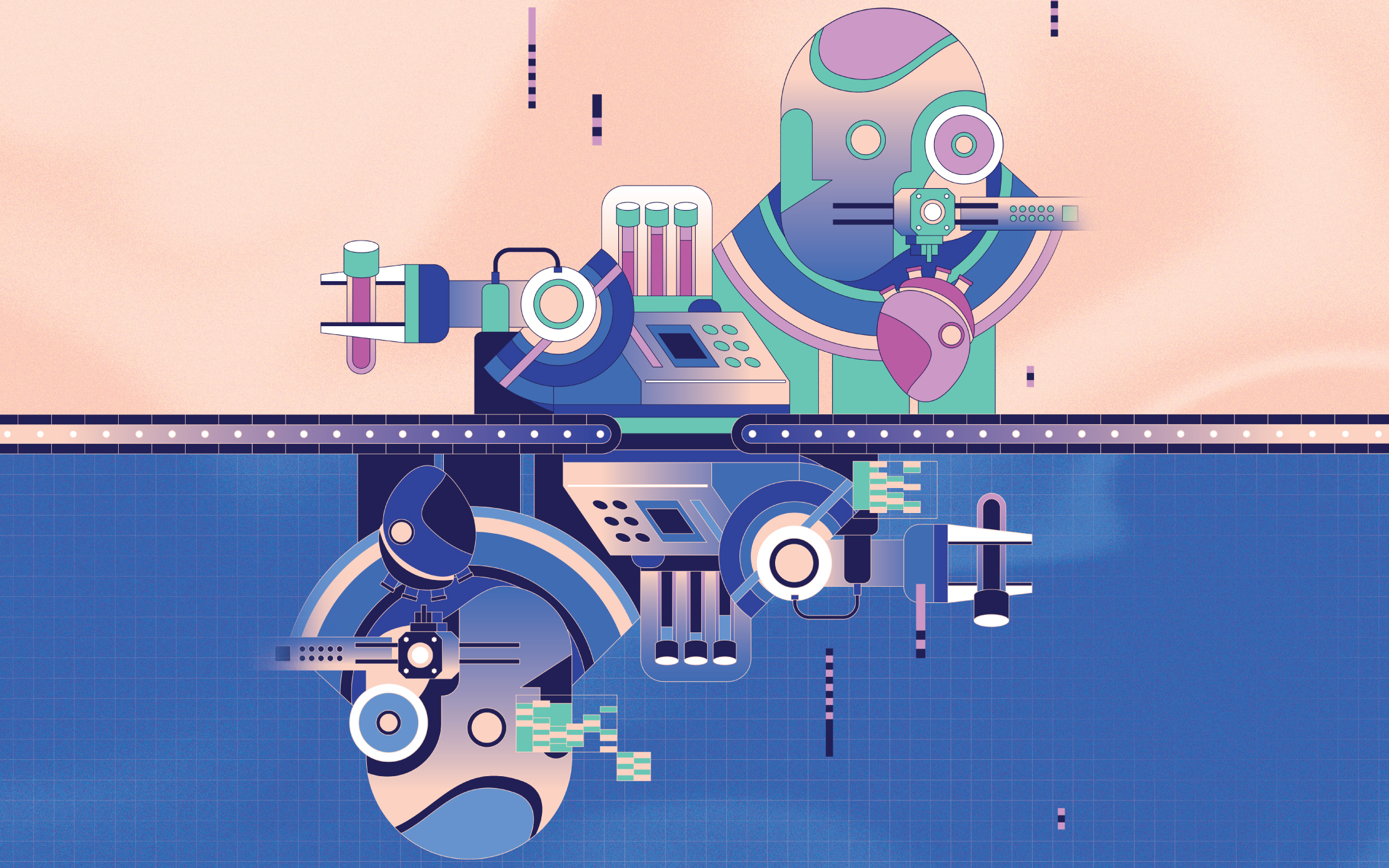
Imagine, displayed on a screen: a replica of a factory, a city's traffic system, or even a human heart. More than a simple copy, it mirrors every move its physical counterpart makes in real time. This is the promise of the digital twin: a dynamic, responsive model constantly fed by real-world data and reacting to it.
“Unlike static computer models, digital twins are interactive proving grounds,” said Yi Su, Executive Director of the A*STAR Institute of High Performance Computing (A*STAR IHPC). “By fusing real-time data, simulation and artificial intelligence (AI) into continuously updated virtual environments, they not only provide safe spaces to test, optimise and refine ideas, but also allow us to essentially see into the future.”
Su added that these models could address pressing needs in research and industry by enhancing speed, efficiency, quality and safety in innovation. They would allow engineers to fine-tune complex processes, surgeons to rehearse delicate procedures, and scientists to accelerate the discovery of new materials, boosting the odds of first-pass success in reality.
At A*STAR today, digital twins are increasingly being woven into the foundations of the entire research ecosystem, driving major initiatives in robotics, manufacturing and healthcare, on top of addressing national challenges such as the energy transition and sustainability. Through multidisciplinary efforts between the agency’s research institutes and ecosystem partners, these complex systems-of-systems are evolving to incorporate the precision of physics-based models, the adaptability of data-driven AI, and the nuances of human behaviour.
“This aligns with our role as the foundational architect and engine for Singapore’s digital twin ecosystem, directly fuelling the nation’s deep tech ambitions,” said Su.
Training robotic ecosystems
As robots of all shapes and sizes roll out more widely across factory floors, warehouses and delivery fleets, digital twins are rapidly gaining traction in robotics R&D. Like human workers, robots need training to not only do their assigned tasks well, but act in concert with other robotic and human partners in a wide range of real-world situations.
“Digital twin technologies can create high-fidelity virtual replicas of physical systems, processes and environments. These help simulate complex workflows, multi-robot coordination and ‘what-if’ scenario analysis at scale,” said Chang Tat Tan, Group Manager of the Robot Operating System-Industrial Consortium Asia Pacific (ROS-I APAC) at the A*STAR Advanced Remanufacturing and Technology Centre (A*STAR ARTC). “This means robotics solutions can be rapidly prototyped, scenario-planned and validated before being physically deployed, significantly reducing risk and accelerating innovation cycles.”
Tan added that industry collaborations have been particularly essential as these solutions require deep integration with diverse operational technologies and enterprise systems. Such collaborations also ensure that virtual replicas are more representative of their real-world counterparts, and that research outcomes are relevant, robust and readily translatable to production environments.
ROS-I’s key projects in AI-powered digital twin technologies include the Robotics Middleware Framework 2.0 (RMF2.0), a next-generation middleware platform for centrally managing large, diverse robotic fleets; as well as the Composable Unified Build of Elements (C.U.B.E.), an integrated digital sandbox for users across the robotics value chain to simulate, train and deploy robotics solutions at scale.
In partnership with heavy industry manufacturer IHI Corporation and other partners, RMF 2.0 has been deployed to coordinate and optimise mobile robot and forklift operations for goods handling in warehouses.
“By developing standardised robotics frameworks, middleware and toolkits with an accompanying sandbox environment, ROS-I aims to enable the seamless integration of digital twins with physical robotic systems,” said Maria Carolina Vergo, ROS-I APAC Consortium Manager. “We also support open-source collaboration models, training programs and translational projects that drive both capability development and industry adoption.”
Mirroring factory floors
Beyond robotics, digital twins are also becoming a cornerstone of manufacturing. With the help of robust sensor networks and predictive analytics, operators can remotely monitor whole factory floors and make more informed decisions that boost production efficiency and minimise waste.
“What’s more, advancements in AI, computing and connectivity have greatly enhanced digital twin technologies by turning them from static models into intelligent, self-improving systems,” noted Jamie Suat Ling Ng, Head of the Advanced and Sustainable Manufacturing Division at the A*STAR Institute for Infocomm Research (A*STAR I2R). “AI can now help process massive amounts of sensor and production data from digital twins in real time, uncovering hidden patterns and optimising processes in ways beyond human capabilities.”
Under the Pharma Innovation Programme Singapore, A*STAR I2R and the Cambridge Centre for Advanced Research and Education (CARES) have jointly developed an AI digital twin platform to provide real-time support for plant operations in pharmaceuticals and specialty chemicals manufacturing.
“The digital twin we developed is a virtual replica of production lines, and is designed to optimise operations, detect anomalies early, and support data-driven decision-making using real-time plant data,” said Lianlian Jiang, A*STAR I2R Senior Data Scientist. “Our scalable system integrates ontology and physical modelling with AI agents that combine knowledge-based physical models and data-driven models trained on sensor data—such as temperature, flow rates and pressure—to identify issues before they escalate. This addresses the challenges of process optimisation in industries with poor process observability and system complexity that often hinder process optimisation.”
The digital twin was developed with CARES’s Alexei Lapkin and Markus Kraft leading on physical modelling and ontology, while Jiang and A*STAR I2R colleagues handled software architecture design, AI model development and AI system integration. Together, they created a system architecture that linked data acquisition, machine-edge processing, cloud-based databases and AI agents with real-time dashboards.
The team validated their model at a pilot plant of nanomaterials manufacturer Accelerated Materials, where it demonstrated robust anomaly detection and root cause analysis capabilities. Jiang noted that the platform’s hybrid fault detection framework successfully identified anomalies such as abnormal tank levels and flow inconsistencies, drawing deeper insights from multi-sensor failures. The technology is currently set for commercialisation by CARES spinoff Chemical Data Intelligence.
“The AI agent in this digital twin can be extended beyond anomaly detection to support quality monitoring, production scheduling and resource planning. By embedding domain knowledge into the system, the technology helps capture and transfer critical expertise while complementing staff expertise,” Jiang added. “We are glad to work with CARES and industry partners to scale up this technology for more complex manufacturing environments.”
Predicting product performance
Within the manufacturing sector, AI-enabled digital twin frameworks such as Intelligent Twin (iTwin) are enabling real-time, on-site monitoring and quality control on the production line itself, providing much-needed support for industries with rigorous standards such as aerospace components and medical devices.
“iTwin continuously assesses a product’s quality during its fabrication by integrating real-time sensor data from manufacturing processes with machine learning and intelligent data analytics,” said Mehdi Jafary Zadeh, an A*STAR IHPC Principal Scientist and team lead for iTwin’s development. “By proactively detecting process anomalies, identifying potential defects and recommending adaptive corrections, iTwin helps manufacturers improve yields, reduce waste and move toward sustainable AI-empowered production.”
Currently, iTwin is focused on metal additive manufacturing (AM) systems, where in situ signals such as heat, sound and vibration patterns provide actionable insights on the stability and quality of 3D printing processes. Under the A*STAR Industry Alignment Fund’s Pre-positioning Programme (IAF-PP), the team’s flagship project—Reuse and Rejuvenation of Additive Manufacturing Powders (RRAMP)—aims to intelligently reduce metal powder waste during AM processes.
“Through RRAMP, iTwin has showcased its abilities to track powder-bed degradation and assure print quality across multiple reuse cycles—something that conventional offline analyses can’t readily achieve,” said Jafary Zadeh. “This integration helps minimise AM scrap, lower production costs and extend the usable life of AM powders without compromising part integrity.”
The team is also working closely with industry partners to seamlessly integrate iTwin with a range of existing manufacturing ecosystems, boosted by its cost-effective use of accelerometers, infrared cameras and other readily available sensors.
While iTwin provides a means of in situ monitoring of AM product quality during printing, the Additive Manufacturing Digital Twin (AM-DT) helps manufacturers during product design and prototyping.
“AM-DT is an end-to-end integrated simulation platform that provides an accurate digital replica of laser powder-bed fusion (LPBF): a key metal AM process,” said Guglielmo Vastola, an A*STAR IHPC Principal Scientist and Project Manager. “
The platform shows users not just the residual stress and distortions in LPBF builds, but also their microstructure, porosity, precipitates and mechanical properties, as well as the effects of process parameters and part design.
“As such, AM-DT can be used to optimise LPBF parameters before actual production, increasing the odds of ‘first-time-right’ printing,” Vastola added.
The AM-DT team has worked extensively with Proterial, a major metal powder manufacturer, in two major projects showcasing the properties of 3D-printed advanced alloy parts developed with their powders. In another collaboration with the A*STAR Singapore Institute of Manufacturing Technology (A*STAR SIMTech) and electronics manufacturer TE Connectivity, AM-DT has enabled the company to digitally identify the optimal printing conditions for their parts, thus saving experimental costs.
Simulating human complexity
When innovation involves a human body rather than a factory floor, testing carries weightier practical and ethical considerations. Yet such testing is critical to ensure that products meant for human consumption—food, drugs, supplements and more—are not only safe, but also work as intended.
“Digital twins are needed most when the experimental means of validating human biomedical research are unsafe, too expensive, too time-consuming or involve vulnerable populations,” said James Chan, Deputy Division Head (Nutrition and Digestive Health) at the A*STAR Singapore Institute of Food and Biotechnology Innovation (A*STAR SIFBI). “The same populations that are most vital to study— pregnant women and young children, for example—are also often the most difficult to access for clinical studies.”
Since 2018, Chan and colleagues at A*STAR SIFBI and the A*STAR Skin Research Labs (A*STAR SRL) have been building a suite of digital twins reflecting the human body, focusing on the holistic effects of ingested and topically applied substances. These platforms have supported extensive product development work with multinational industry partners.
“Our digital twins carry as many biological, physiological and anatomical features as possible to create detailed, realistic and precise virtual representations of human beings,” said Chan, who is also an A*STAR SRL Principal Investigator. “We aim to accurately estimate and predict what happens the moment someone takes a bite, pops a pill or applies a cream: from the tissues and organs that active substances travel to, to the exact minute-by-minute changes that result. This allows innovators to test and refine products while minimising the need for human subjects.”
One key A*STAR SIFBI project led by Research Scientist Kenneth Hor Cheng Koh is a digital twin that comprehensively models various states of glucose control. Chan noted that while the model remains internal to A*STAR, the team has been trialling its use in combination with data from wearable devices to predict prediabetes, achieving a reported 90 percent accuracy rate in its latest iteration.
“We’ve also been conducting digital twin studies on the long-term health effects of forever chemicals at a granular level,” said Chan, referring to a class of contaminants in food, water and cookware known to persist for years in the human body. “We’re working with local and global regulatory bodies in this area to develop guidelines on safe exposure limits for these chemicals.”
Enhancing health diagnostics
Digital twins are also aiding clinicians by providing realistic models of disease development based on diverse healthcare data sources, including medical imaging, clinical measurements, genetics and population studies, noted Weimin Huang, a Senior Principal Scientist at A*STAR I2R.
“For example, digital twins can simulate the development of cardiovascular disease (CVD) through plaque property measurements from images and blood tests, paired with AI-aided inferences of CVD risk or progression,” said Huang. “Specific models, such as dynamic full heart models created from computed tomography (CT) and echocardiogram data, are already possible today; in the future, we could see more complete digital replicas that tie physiological data with real-time vital sign monitoring.”
A related effort in this area is the Singapore Heart Lesion Analyser (SENSE), an AI-aided system that accelerates the evaluation of coronary artery disease (CAD) risk from cardiac imaging scans. Developed in a joint effort between Huang and A*STAR I2R colleagues, the A*STAR Bioinformatics Institute (A*STAR BII), the National Heart Centre Singapore, the National University Hospital and Tan Tock Seng Hospital, SENSE is currently being deployed for testing with a cohort of 300 patients at its partnering hospitals. A full heart model built using CT scans serves as a core component of SENSE’s cardiac digital twin capabilities.
Huang added that SENSE builds on AI technologies developed in a preceding project: the AI driven national Platform for CT cOronary angiography for clinicaL and industriaL applicatiOns (APOLLO).
“The APOLLO suite provides rapid and comprehensive measurements for CAD using non-contrast CT and CT coronary angiography, calcium scores, epicardium adipose tissue, coronary artery stenosis grading and plaque classification,” said Huang. “It has helped reduce processing times for patient scans by an estimated 20-fold; from a few hours to less than 10 minutes per person.”
Foundations of future innovation
At a national level, A*STAR is also enabling key digital twin initiatives such as the Singapore Integrated Transport and Energy Model (SITEM), which blends simulations of the national power grid with real-world human driving behaviour and vehicle travel patterns to aid long-term planning for electric vehicle charging infrastructure.
“As part of Singapore’s S$25 million Weather Science Research Programme, A*STAR is also developing high-resolution regional weather reanalysis datasets to enhance forecasting accuracy and climate modelling capabilities,” said Su.
The agency is also catalysing the country’s net-zero emissions goals through the Centre for Energy and Emissions Modelling 2.0 (CE2M 2.0), a first-of-its-kind integrated digital twin that simulates how decarbonisation efforts across energy, industry and transportation sectors will interact. Developed with government agencies and research partners, CE2M 2.0 provides critical insights for coordinated policies that balance climate goals with national needs.
“Through such initiatives, A*STAR is building a digital core that allows Singapore to simulate, validate and master our complex future—from national systems to industrial competitiveness,” Su concluded.
In brief: Other digital twin R&D initiatives
- Migrant worker dormitory airflow simulations for healthy living space design (Singapore Ministry of Manpower)
- OPTIMISEProp for marine propeller design and manufacturing (Mencast, National Supercomputing Centre Singapore)
- Universal optical proximity correction framework for advanced photonics hardware fabrication (National Semiconductor Translation and Innovation Centre)
- AI-based Predictive Maintenance tool to avert flight delays and reduce Aircraft on Ground (AoG) technical incidents (Singapore Airlines)