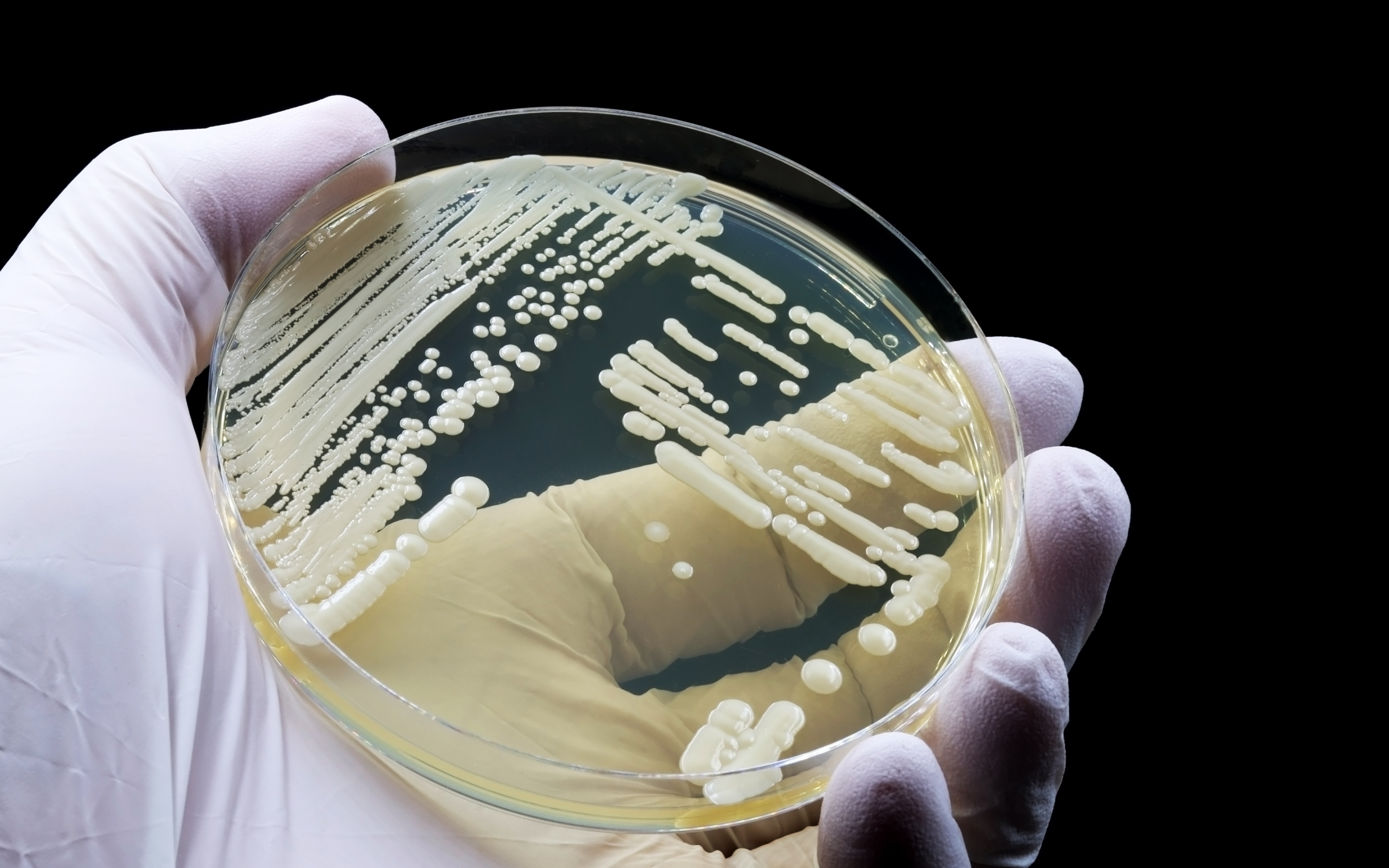
Quietly lurking on hospital surfaces, the fungus Candida auris can cause difficult-to-control outbreaks in healthcare facilities. This invasive threat is fuelled by its resistance to several antifungal drugs, including fluconazole, the most widely used treatment for serious Candida infections.
Earlier studies have flagged the key drivers of resistance as mutations in drug targets, as well as increased activity of fluconazole efflux pumps, which are molecular transporters that expel the drug from the cell. “But these mechanisms do not entirely explain the reduced susceptibility observed in C. auris. The fungus may have additional ways of adapting and surviving,” said Yue Wang, a Senior Principal Investigator at the A*STAR Infectious Diseases Labs (A*STAR IDL).
Wang and his team—in collaboration with Jiaxin Gao, a former Postdoctoral Research Fellow at the A*STAR Institute of Molecular and Cell Biology (A*STAR IMCB) and A*STAR IDL—took a broader approach to understand how C. auris survives fluconazole exposure, going beyond established resistance-linked genes to carry out a genome-wide screen. This strategy also involved studying how genetic changes interact, allowing the researchers to rapidly gain mechanistic insights.
They found that deletion of the mitochondrial gene PET309 made the fungus less susceptible to fluconazole. Further investigation showed that this effect involved not only the known fluconazole pump Cdr1, but also a calcium transporter called Cdt1. Normally, Cdt1 helps regulate the cell’s internal calcium levels by pumping it into a subcellular compartment called the vacuole.
“We initially would not have expected Cdt1 to function as a drug removal system, but our experiments revealed that this calcium pump has a previously unrecognised role in helping C. auris cells export fluconazole,” said Wang.
A combination of sequencing and imaging assays then showed that fluconazole exposure activated the calcineurin signalling pathway to boost Cdt1 production. Cdt1 also moves from the vacuoles to the cell membrane, where it takes on a new role as an efflux pump, reducing fluconazole levels inside the cell.
This newly discovered mechanism might serve as an evolutionary stepping stone, allowing C. auris to tolerate the initial drug stress and give the fungal population a chance to develop stable resistance over time, explained Wang.
The team next hopes to uncover how exactly fluconazole triggers Cdt1’s relocation and repurposing, as well as explore whether disrupting the pump’s movement or its ability to remove the drug from the cell could become clinically viable strategies against C. auris infections.
“Our findings show how different parts of the cell can be connected in ways that ultimately determine whether an antifungal drug succeeds or fails,” Wang said. “Understanding these early adaptive responses may provide opportunities to intervene before stable resistance emerges and help us develop more effective antifungal drugs.”
The A*STAR-affiliated researchers contributing to this research are from the A*STAR Infectious Diseases Labs (A*STAR IDL).