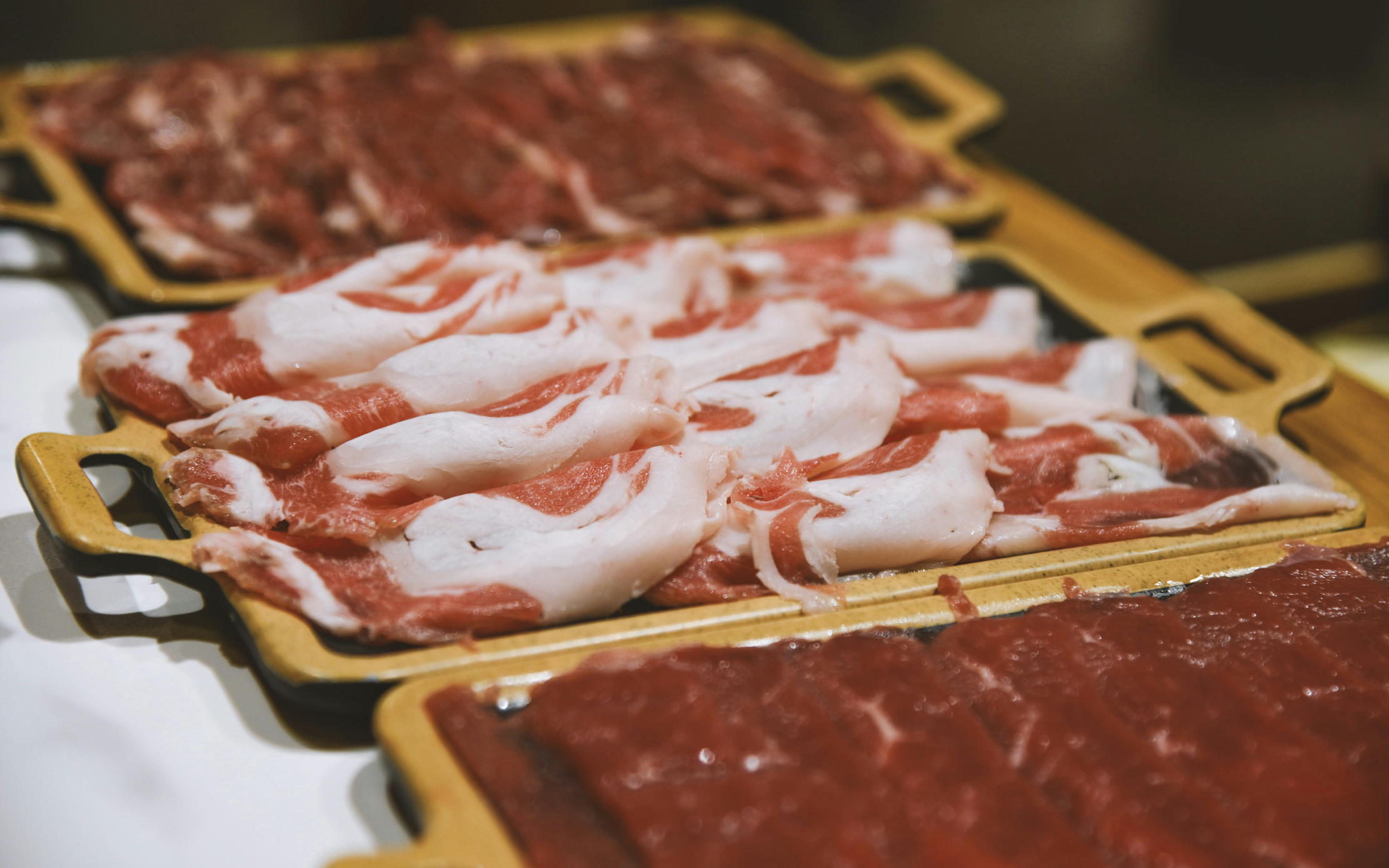
Rather than being sliced and stacked, what if the meat alternatives of the future emerged from droplets in motion?
A technique called rolling droplet interfacial polyelectrolyte complexation (RD-IPC) could bring us closer to that reality. Pioneered by researchers from the A*STAR Singapore Institute of Food and Biotechnology Innovation (A*STAR SIFBI), A*STAR Institute of Bioengineering and Bioimaging (A*STAR IBB) and A*STAR Institute of Molecular and Cell Biology (A*STAR IMCB), RD-IPC involves edible, oppositely charged biopolymer droplets. As these droplets fall and interact, the resulting fibres resemble the aligned structure of animal muscle tissue, effectively emulating the texture of traditional meat.
Convincingly matching the flavour, texture and appearance of animal meat is key to enhancing the consumer appeal of alternative meat products. While the original RD-IPC method showed promising results, issues of scalability quickly became apparent.
“When the RD-IPC technique was first developed, the fibres were drawn by gravity, making it quite a slow process,” said Andrew Wan, a Senior Principal Scientist at A*STAR SIFBI.
To achieve the high throughput required for commercialisation, the SIFBI team devised a roll-on collection method, which simultaneously draws and collects the fibres on a rotating drum. Beyond speed, this approach also allows more precise control over where to place different nutrients in a product.
“With every rotation of the drum, new fibres are deposited on previously laid ones, building up a meaty construct layer by layer with various nutrients targeted to specific layers,” said Wan.
To better mimic pork belly, for example, the researchers deposited alternating layers of fat and protein into their meat analogues. This produced a sensory profile that not only differed substantially from protein-only versions, but also delivered a distinct texture compared to products made by simply mixing the nutrients together.
Moreover, roll-on-based RD-IPC is compatible with both plant-based ingredients and cultivated cells, serving as a flexible technology for producing hybrid alternative meat products. After testing various combinations of fat and cultivated pork cells, the team observed that such hybrid structures may be the key to emulating the flavour profile of traditional meat.
“It enables the production of realistic, fibrous, whole-cut and structured meat alternatives,” said Wan. “We believe that our current method is potentially more cost-effective, has a smaller environmental footprint and is amenable to scale-up and commercialisation.”
With a patent now granted for their technology, the researchers are continuing to refine the sensory qualities of their analogues to more closely match the texture, aroma and flavour of animal meat.
The A*STAR-affiliated researchers contributing to this research are from the A*STAR Singapore Institute of Food and Biotechnology Innovation (A*STAR SIFBI).