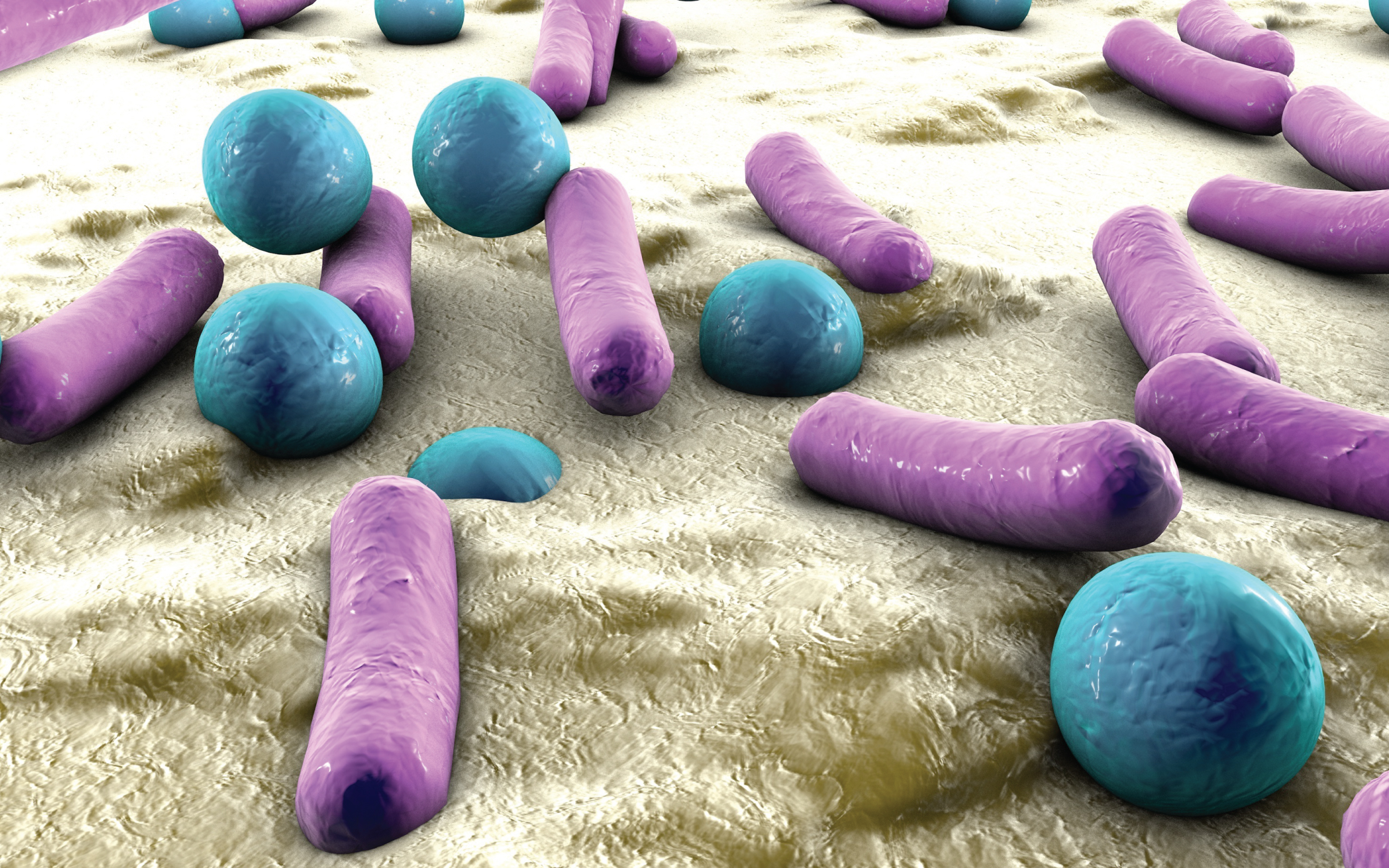
While our skin hosts billions of microbes, telling them apart isn’t as daunting as it seems. Metagenomics tools, which profile entire landscapes of DNA, can help researchers catalogue almost every species present on a patch of skin. However, some bigger questions remain: what are these microscopic residents actually doing? Which ones have the greatest effects—good or bad—on their neighbours and hosts?
To answer these questions, researchers at the A*STAR Genome Institute of Singapore (A*STAR GIS) are turning to metatranscriptomics. “It provides a more direct measure of microbial activity through gene expression,” said Minghao Chia, a Fellow at A*STAR GIS and A*STAR Bioinformatics Institute (A*STAR BII). “Metagenomic data alone can’t distinguish signals from living versus dead organisms, or from metabolically active versus inactive ones.”
However, attempts to functionally profile the skin microbiome have long been hampered by the skin’s low microbial biomass, frequent contamination of samples with host cells, and RNA’s inherent instability compared with DNA. Yet a recent workflow developed by Chia and A*STAR GIS colleagues, in collaboration with the A*STAR Skin Research Labs (A*STAR SRL), has yielded two breakthroughs in improving skin-specific metatranscriptomics protocols.
“We confirmed that compared to tape-based sampling, skin swabs subjected to direct TRIzol-based extraction consistently yield more material and preserve fragile RNA better,” said Chia. “We also built a customised bioinformatics pipeline to annotate skin-specific genetic signals with higher sensitivity than current general-purpose tools.”
To test their workflow, the team profiled five body sites—scalp, cheek, forearm, elbow crease and toe web—across 27 healthy adults. The results showed that microbial abundance isn’t the same as activity: while Cutibacterium acnes, an acne-linked bacterium, dominated metagenomic profiles, it contributed in far smaller proportion to RNA activity (2‒31 percent). Conversely, Malassezia fungi—known for their roles in dandruff—were modest in DNA abundance, yet accounted for up to 81 percent of transcriptional activity.
“The relatively low abundance of Malassezia cells means DNA-based studies often underestimate their contribution to the active skin microbiome,” said Niranjan Nagarajan, Associate Director and Senior Group Leader at A*STAR GIS.
Chia added that prior work at A*STAR SRL showed that Malassezia secretes proteases that degrade host proteins, potentially interfering with wound healing. “Our analyses confirm that these fungi are major contributors to actively expressed genes in the skin microbiome,” he said.
Species-level analysis also uncovered unexpected metabolic shifts. The common skin bacterium Staphylococcus epidermidis was far more active on skin than in laboratory cultures in producing certain bioactive compounds such aspropionate: a short-chain fatty acid that helps maintain the skin’s protective barrier and modulate immune responses.
With the workflow’s efficacy established in healthy individuals, disease-focused applications are next. “There’s great potential for metatranscriptomics in profiling acne, partly due to the higher microbial biomass found on facial skin,” said Nagarajan, noting the growing interest in acne vaccines that target specific microbial proteins.
The A*STAR-affiliated researchers contributing to this research are from the A*STAR Genome Institute of Singapore (A*STAR GIS), A*STAR Bioinformatics Institute (A*STAR BII) and A*STAR Skin Research Labs (A*STAR SRL).