Everyone has a different story embedded in their genes that narrates biological features from eye colour to risks for diseases such as cancer, which are further influenced by external factors revising the tale. Producing an accurate account of these genetic variations requires both reading tools to capture the sequences and assemblers to reconstruct the genome.
Like connecting puzzle pieces based on similar colours and shapes, assembler algorithms deduce how DNA segments fit together by searching for overlapping sections between sequencing reads. This poses a challenge in haplotype-resolved telomere-to-telomere (T2T) assembly, where two separate copies of entire chromosomes are reconstructed end-to-end, as the copies we inherit from each parent are very similar.
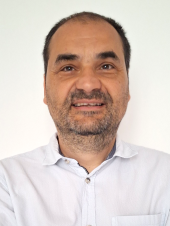
“It is like rebuilding two similar editions of the same book,” said Mile Šikić, a Senior Principal Scientist at the A*STAR Genome Institute of Singapore (A*STAR GIS). “Recovering every page in each edition is important because some of the most interesting regions, such as large repetitive sequences, were historically missing or incorrectly represented in reference genomes.”
Resolving these regions requires reads long enough to span the repeats and accurate enough to tell near-identical copies apart, but length usually comes at the cost of accuracy. For ultra-long nanopore data, assemblers have trouble determining whether two similar sequences differ because of errors or because they are truly different copies of a repetitive section. Traditional error-correction algorithms can sometimes exacerbate the problem by ‘fixing’ a real biological variation.
In collaboration with the University of Zagreb, Croatia and Oxford Nanopore Technologies, Šikić, A*STAR GIS Scientist Dominik Stanojević and team developed the HERRO (haplotype-aware error correction) algorithm to correct sequencing errors more reliably in nanopore datasets.
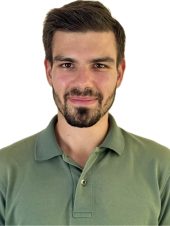
HERRO uses a deep learning model and focuses on positions where overlapping reads disagree. “It learns to tell sequencing errors apart from real differences between maternal and paternal chromosomes or between copies of highly similar repetitive sequences, so that those differences are preserved,” said Stanojević, first author of the study. Retaining those small variations sets HERRO apart from traditional error-correction approaches as its goal is not to remove as many differences between overlapping reads as possible.
HERRO reduced read errors by up to 100-fold in human genomes, while the original ultra-long reads were retained to provide long-range information. Assembling the corrected reads, the researchers reconstructed up to 32 of the 46 chromosomes end-to-end, including the traditionally difficult X and Y chromosomes.
With HERRO, ultra-long nanopore reads can serve as the sole long-read dataset to produce T2T assemblies that previously required multiple long-read sequencing technologies, potentially helping reduce costs and the amount of DNA needed.
Šikić’s team is now working to improve HERRO’s accuracy, speed and computational efficiency. They aim to apply the algorithm to more complex scenarios with atypical chromosome copies or structural rearrangements, such as cancer genomes.
The A*STAR-affiliated researchers contributing to this research are from the A*STAR Genome Institute of Singapore (A*STAR GIS).