


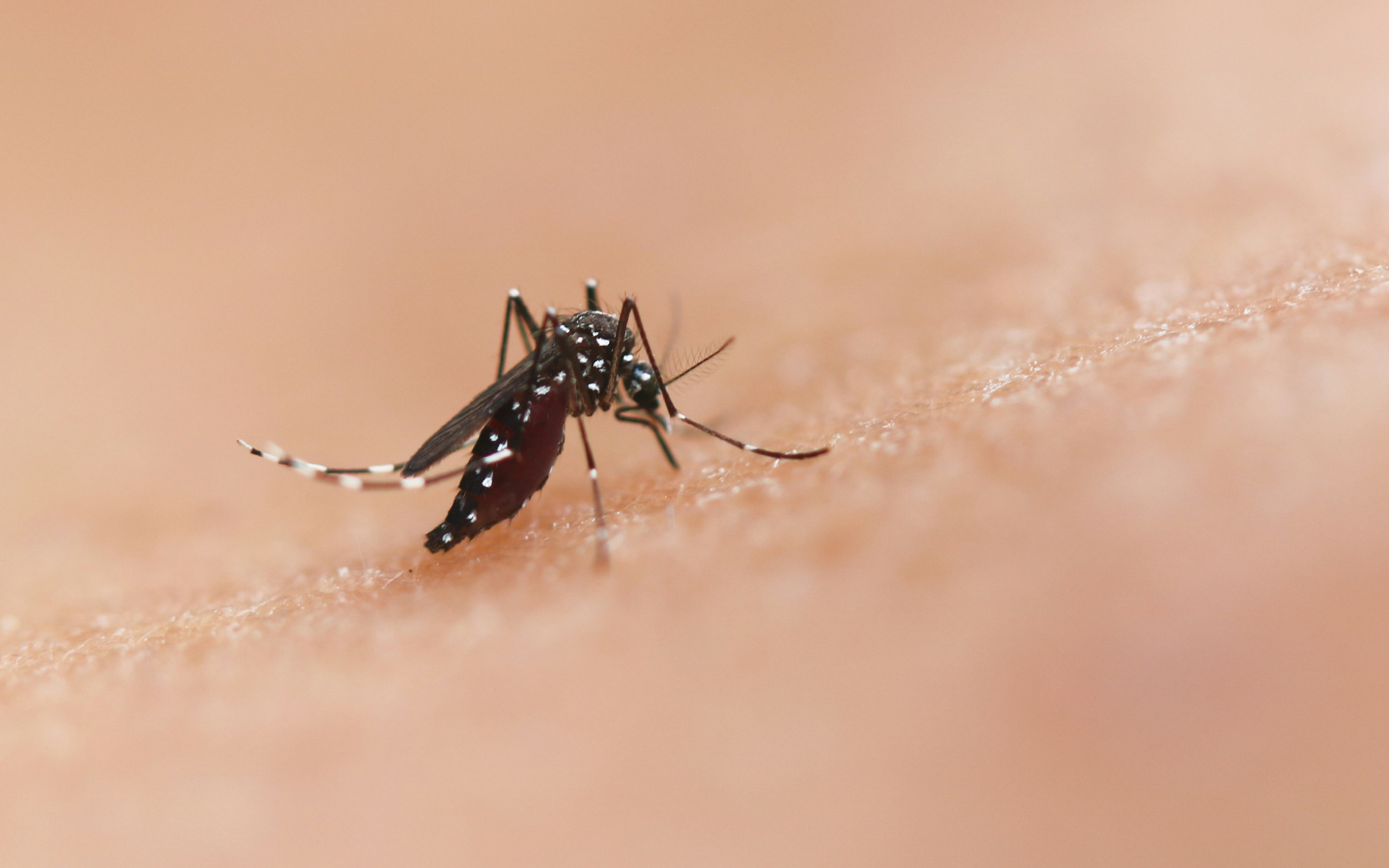
As the mosquito pierces the skin to feed, viral particles seep into the human bloodstream. The Aedes aegypti mosquito is a notorious disease carrier, facilitating the spread of dengue and chikungunya virus (CHIKV) infection. But besides being the flying vector whose bite enables viral entry into the human body, mosquitoes have typically escaped blame, with all the focus being on how the virus itself leads to the development of disease.
“Our study challenges that view,” said Siew-Wai Fong, a Senior Scientist at the A*STAR Infectious Diseases Labs (A*STAR IDL). “Mosquito saliva is not biologically inert and actually influences the host body in ways that actively shape the CHIKV infection outcome.” Some of these salivatory factors numb the skin, and others prevent blood clotting. Among them, a peptide called sialokinin reportedly influences the host’s immune response, but the exact biological pathways have remained unclear.
Fong and A*STAR IDL Executive Director Lisa Ng led a multi-institutional team to investigate how sialokinin can affect the human body, collaborating with researchers from the National University of Singapore and the National Centre for Infectious Diseases, Singapore. Through mouse infection models, they used assays designed to pinpoint signalling interactions between sialokinin and host proteins.
Their experiments revealed that sialokinin actively primes the immune environment during infection, starting by binding to receptor proteins called NK1R and NK2R. This then sets off a cascade of downstream pathways, triggering PI3K/Akt signalling and leading to lowered expression of another surface protein, CD169. Activated monocytes—immune cells involved in early antiviral defence—use CD169 to coordinate infection-fighting responses, and when reduced, the protective response against the virus is effectively suppressed. This meant that disease severity depends not only on viral replication, but also on how the mosquito saliva conditions the early immune response, Fong explained.
The team also found that sialokinin worked in different ways early and late into the infection process. “We realised that timing is key,” said Ng. “Early in infection, sialokinin promoted increased blood vessel leakage and dampened immune alertness, helping the virus spread more easily in mice.” Later, the animals showed suppressed inflammatory activity, which could prevent the immune system from fully clearing the virus despite mitigating visible symptoms.
Meanwhile, in a clinical cohort of 30 CHIKV patients, those with severe disease carried not only higher viral load but also higher antibody levels against sialokinin. Rather than indicating protection, the researchers suggest that these antibodies may reflect repeated exposure to mosquito saliva, where triggering or priming the immune system may inadvertently amplify disease severity instead of building defensive measures.
The researchers are now investigating whether similar saliva-driven immune effects occur in other mosquito-borne diseases such as dengue and Zika, and whether disrupting saliva-host interactions could reduce disease severity. They also filed a Singapore Provisional Patent Application on using sialokinin antibodies as potential biomarkers for such infections.
The A*STAR-affiliated researchers contributing to this research are from the A*STAR Infectious Diseases Labs (A*STAR IDL).


